

Key Takeaways
Why fewer products can produce better results
Makeup spending tends to grow not because individual products are expensive, but because the collection grows without a clear logic behind it. A drawer full of products that mostly overlap does not produce more looks; it produces more clutter and more monthly cost. A small, deliberately chosen set of products used with practiced technique can cover casual days, work settings, and evenings out.
The approaches below address both what to buy and how to use what you have. Each one builds on a principle: efficiency in application reduces product waste, and versatility in formula reduces product count. Together they let you maintain a consistent routine without watching the budget stretch thin every month.
Ingredient labels matter at every price point
Lower-cost makeup products can share many of the same pigments and film-forming ingredients as pricier counterparts. Reading the ingredient list on any product helps you compare formulas across price tiers rather than relying on packaging claims. For a deeper look at how this applies to skincare, skincare ingredients that punch above their price walks through what to look for on any label.
Six approaches that stretch your makeup budget
Build on a well-prepped base
How your skin looks before any makeup goes on determines how much product you need to apply. A hydrated, moisturized face holds foundation more evenly and requires less coverage to look polished. If your skin is dry or patchy, you tend to layer more product, which means you run through it faster.
Start with a simple moisturizer and, if you use one, a sunscreen. Both help makeup sit better and last longer throughout the day. Waiting two to three minutes after applying skincare before reaching for foundation lets those layers absorb and prevents pilling. This step costs nothing extra if moisturizer is already part of your routine, and it can reduce how often you need to reapply or touch up. For product choices that support this approach, see building a morning skincare routine without overspending.
A hydrated base means you use less foundation and touch up less often.
Use one product in multiple ways
Multitasking is the most direct way to cut product count without cutting looks. A cream blush, for example, can double as a lip color by pressing a small amount onto the center of the lips and blending outward. A neutral brown eyeshadow can function as a brow filler, a soft eyeliner, and an eyeshadow all at once. A tinted moisturizer can replace both a separate moisturizer and a foundation on low-key days.
When shopping, consider whether a product you already own can serve a second purpose before adding a new one to your collection. This habit narrows your monthly spend considerably without shrinking the variety of looks you can create. Cream and powder formulas that work on eyes, lips, and cheeks are widely available at drugstore price points.
One cream blush can serve as lip color, cutting two purchases down to one.
Focus on the monochromatic look
Wearing the same shade family across eyes, cheeks, and lips is one of the most affordable approaches to a put-together look because it reduces the total number of shades you need. A single terracotta or dusty rose, for instance, can run from eyelids to cheekbones to lips with very little effort. The result reads as intentional rather than minimal.
Warm nudes, soft corals, and muted mauves tend to be the most versatile because they flatter a wide range of skin tones. Choosing products in these ranges also means that even if two products do not match perfectly, they still coordinate. That tolerance for slight variation makes the look forgiving to execute and practical to maintain with a small product collection.
A single shade family across eyes, cheeks, and lips means fewer products and consistent results.
Rely on mascara and a defined brow
When the goal is a complete look with the fewest products possible, mascara and filled brows do more work than almost any other combination. Both draw attention to the upper face, which most people perceive as the area that signals effort and polish. A single coat of mascara on upper lashes opens the eyes without requiring eyeshadow, liner, or primer underneath.
For brows, a pencil or a small angled brush with shadow lets you mimic natural hairs rather than drawing a flat line, which ages better throughout the day. A spoolie brush, often included with pencils or available separately at low cost, grooms brows into shape before and after filling. These two products together cover a significant portion of what a full face of makeup communicates, at a fraction of the product count.
Mascara and defined brows create the impression of a full face with just two products.
Set makeup with what you already have
Setting spray or a translucent powder extends how long makeup stays in place, which means you apply it less often and products last longer per bottle or compact. Translucent powder is especially practical because one pressed or loose powder can set the entire face, control shine, and reduce the need for touch-up products through the day.
If a dedicated setting spray is outside the budget, lightly misting your face with water after makeup application produces a similar effect by melding powder and cream products together. This costs nothing if you already have a small spray bottle at home. The goal is simply to prevent creasing and separation, both of which prompt people to reapply and therefore shorten product life.
Making makeup last longer means buying replacements less often, which adds up over months.
Keep a consistent routine to prevent impulse buys
One of the clearest drivers of makeup overspending is buying products without a plan. Picking up items because they are new, on display, or seem like they might fill a gap leads to a collection with redundancies and gaps at the same time. A short, written list of what you actually use each week makes it easier to identify what genuinely needs replacing versus what is simply appealing in the moment.
The same principle that applies to grocery and household spending translates directly here. A structured weekly routine reduces the decisions that lead to impulse purchases. Knowing which five or six products you reach for daily makes it straightforward to replace only those items, rather than experimenting with additions that rarely get used.
A short, written list of weekly products prevents buying items that add up but never get used.
Putting it together as a real routine
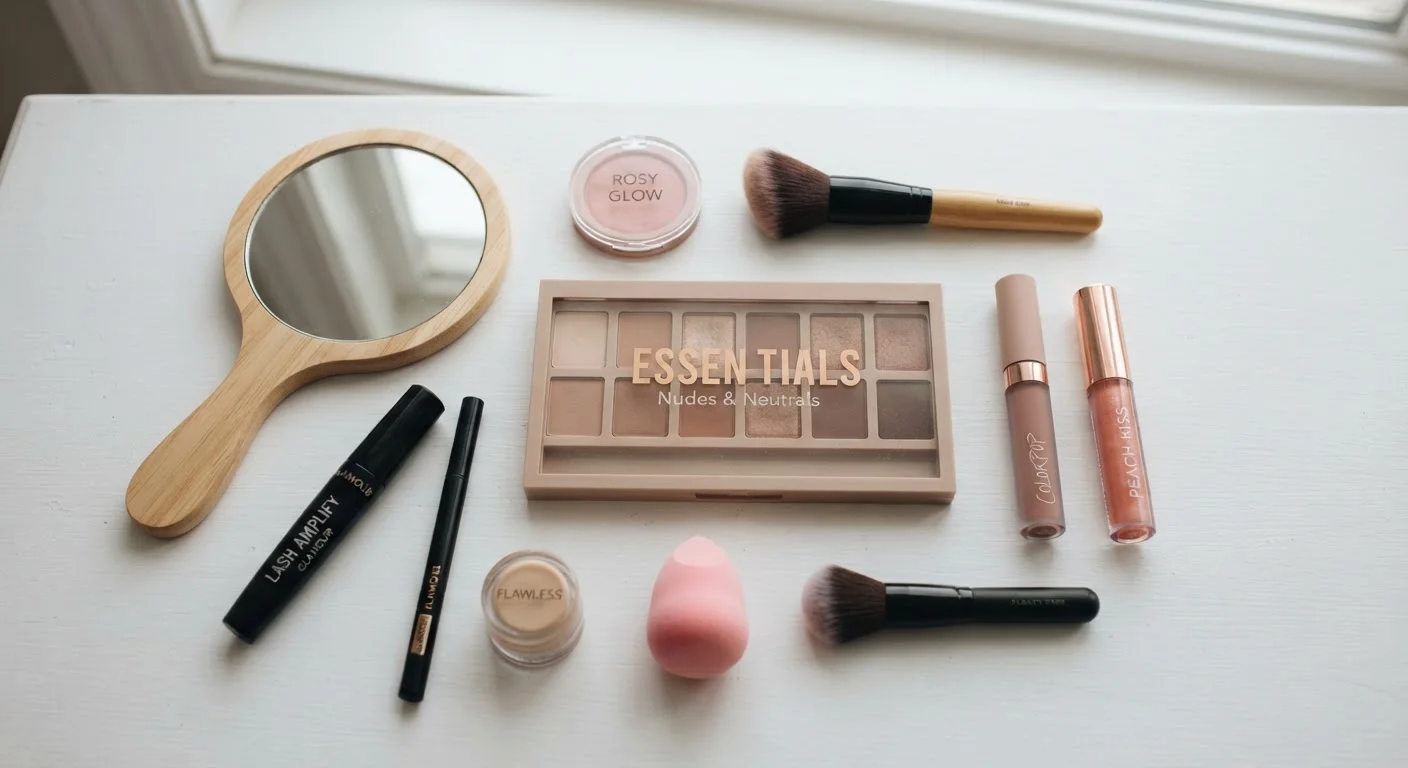
A practical budget routine might look like this: moisturizer as a prep step, tinted moisturizer or light coverage foundation applied with fingers, cream blush pressed onto cheeks and lips, a neutral shadow swept across lids, brows filled with a pencil, and one coat of mascara to finish. That covers every zone of the face with five or six products, most of which serve more than one purpose.
The same logic applies beyond makeup. Hair care at home follows a parallel structure: fewer targeted steps done consistently outperform a complicated routine done sporadically. Once a routine is stable, it becomes easier to spot what actually needs replacing versus what is simply appealing in a store aisle.
Clean brushes extend both tool and product life
Dirty brushes pick up less pigment and deposit unevenly, which leads you to use more product per application. Washing brushes weekly with a gentle soap removes buildup and keeps bristles soft. This takes under five minutes and costs nothing beyond what you already have at home.
This article is for general informational purposes only and does not constitute professional advice. Product performance varies based on individual skin type and application technique.