

Key Takeaways
Why skincare shelves get expensive fast
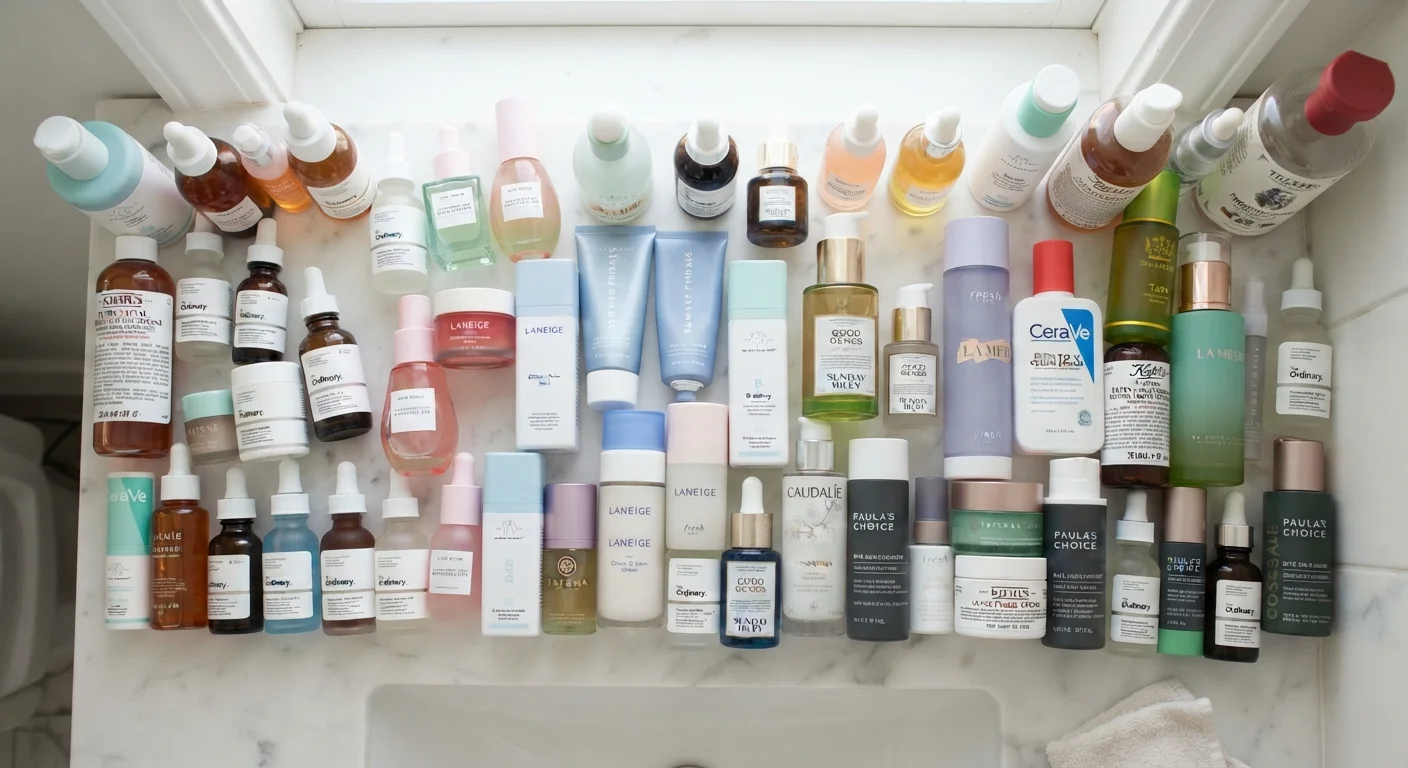
The average American household spends hundreds of dollars a year on skincare, yet dermatologists consistently find that most skin concerns respond to a handful of well-chosen ingredients. The gap between what routines need and what people actually buy is wide, and it is not accidental. Packaging, influencer content, and retail placement all push shoppers toward adding rather than evaluating.
The problem compounds because skincare purchases feel low-stakes individually. A $14 toner or a $22 eye cream seems minor, but those choices accumulate into real spending. Building a morning routine from scratch reveals just how few products a complete, effective routine actually requires. If you have ever looked at your collection and wondered which products are genuinely doing something, this guide is for you.
Buying a separate eye cream instead of using your existing moisturizer.
Why it happens: Eye creams are heavily marketed as specialized treatments, which implies the skin around the eye needs a unique formula. In most cases, the ingredient list closely mirrors a standard facial moisturizer, sometimes in a smaller jar.
Stacking multiple serums that address the same concern.
Why it happens: Serums are often sold as targeted solutions, so buyers assume more is more. Two brightening serums or two hydration serums applied together do not double the benefit and can increase the likelihood of sensitivity.
Purchasing a toner without knowing what it is supposed to do in your routine.
Why it happens: Toners were historically used to restore skin pH after harsh cleansers, but modern cleansers are generally pH-balanced already. Many toners today are essentially diluted actives or water-based hydration with little unique benefit.
Replacing a working product because a newer version promises more.
Why it happens: Brands regularly release reformulations or line extensions described as 'improved.' Shoppers feel their current product has become outdated, even when it is still performing well for their skin.
Buying a dedicated neck cream as a separate product.
Why it happens: Neck creams occupy a specific shelf in most skincare aisles and are marketed around a distinct concern, aging or sagging skin on the neck. The price is usually higher than facial moisturizer for a comparable or smaller volume.
Investing in high-priced tools that duplicate manual techniques.
Why it happens: Facial rollers, gua sha stones, and cleansing devices are heavily promoted on social media with visible before-and-after content. The implied benefit is that the tool produces results unavailable from hands-on application.
What the spending patterns reveal
When researchers have surveyed consumer skincare habits, a consistent pattern appears: people own far more products than they use regularly, and many cannot name what a product is meant to do. That is useful information. If you cannot state the function of something in your routine, it probably was not a deliberate purchase.
~$300
Average annual U.S. skincare spending per person
Estimates from consumer market research suggest the average American spends roughly $300 per year on facial skincare products alone, not including body care or sun protection.
60%+
Products owned but used infrequently
Consumer behavior surveys in the personal care category have found that a majority of owned skincare products are used less than once a week, indicating frequent over-purchasing relative to actual use.
Cutting unnecessary products also reduces the risk of irritation. The more actives you layer, the greater the chance two ingredients interact in ways that stress the skin barrier. A stripped-back routine is not a compromise; it is often a measurable improvement. For a broader look at how these same accumulation patterns appear in other spending areas, see grocery shopping habits that quietly inflate your bill.
If you want to know which ingredients are worth keeping, skincare ingredients that punch above their price is a direct resource for reading labels with confidence.
Layering actives can cause irritation
Combining multiple products that contain acids, retinoids, or vitamin C in the same routine can disrupt the skin barrier and cause redness, peeling, or sensitivity. This is not a sign the products are 'working harder.' If you experience persistent irritation, simplify your routine and consult a dermatologist before reintroducing actives.