

Key Takeaways
Our Verdict
No single lodging type wins for every family. Camping costs the least per night but demands preparation and flexibility. Hostels are well-suited to adults or older teens on solo or small-group trips. Vacation rentals carry higher nightly rates but deliver full kitchens and private space that can offset food and activity costs on longer stays.
| Best for | Recommended |
|---|---|
| Families who already own gear and enjoy outdoor flexibility | Camping |
| Adult travelers or parents with older teens on short, social trips | Hostels |
| Families staying four or more nights who want a kitchen and private rooms | Vacation rentals |
| Mixed groups weighing comfort and cost on a week-long trip | Vacation rentals |
What you are actually comparing
Lodging is usually the largest single cost in a family trip budget. See where lodging fits in the full picture before locking in a choice. The three options here sit at very different points on the price-versus-comfort spectrum, and the right pick depends on group size, trip length, and how much preparation your family is willing to do.
This comparison covers what each option typically costs, what it asks of you, and where it breaks down so you can match the lodging style to your actual trip rather than defaulting to habit.
Camping: low nightly cost, higher upfront demand
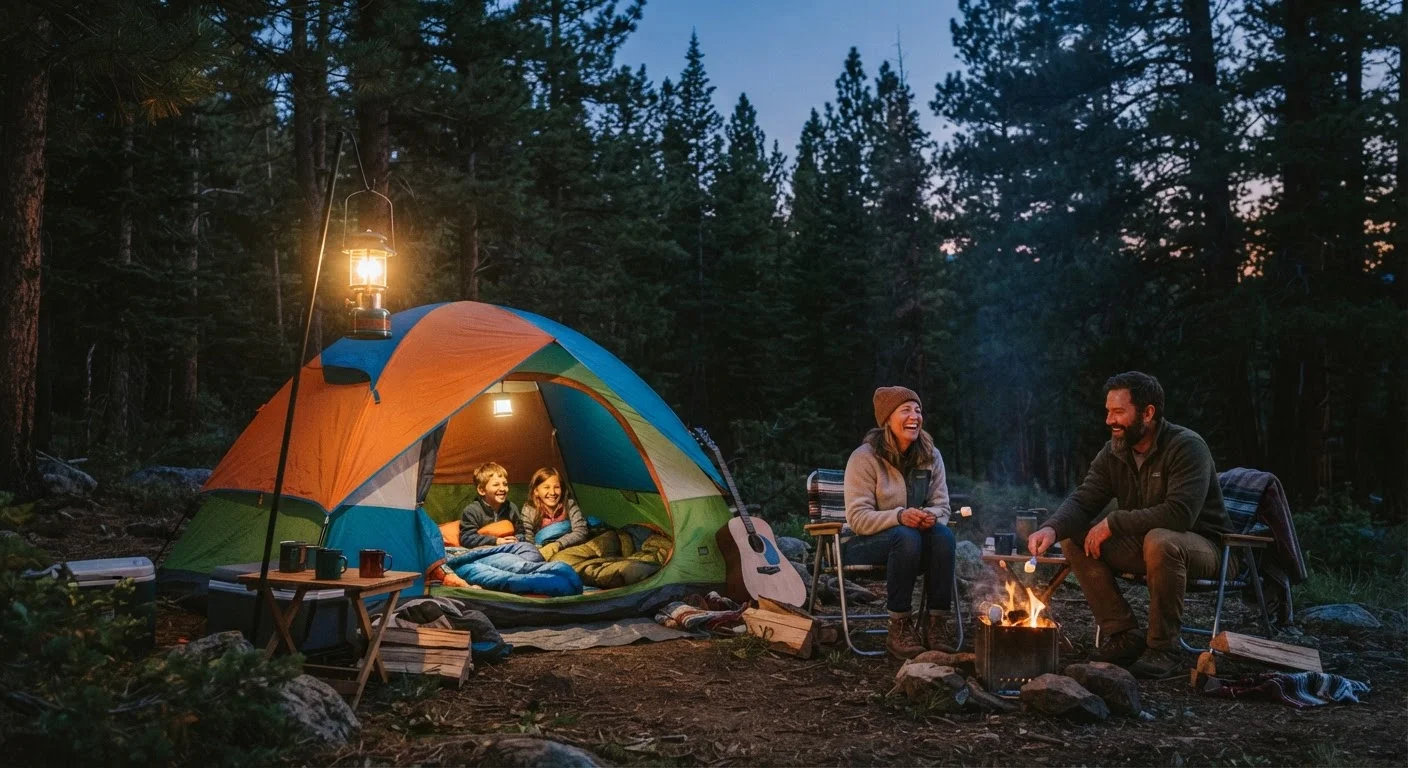
Campsite fees at public campgrounds in the U.S. generally range from around $15 to $45 per night, with some primitive sites costing even less. For a family of four, that is a fraction of most hotel rates. National forest and Bureau of Land Management dispersed camping is free in many areas, though it requires more self-sufficiency.
The cost caveat is gear. A family new to camping needs a tent, sleeping bags rated for local temperatures, sleeping pads, a camp stove, and cooking equipment. Buying all of it new can run several hundred dollars before the first night. Renting gear or borrowing from family keeps startup costs lower.
Weather is the other variable camping cannot eliminate. Rain, heat, or insects can make a trip genuinely uncomfortable, especially for younger children. Campgrounds in popular areas also fill quickly; reservations several months in advance are common at well-known national and state parks.
Camping pairs particularly well with national park visits. If you are weighing that type of trip, compare national parks against theme parks for a broader cost picture.
| Camping | Hostels | Vacation Rentals | |
|---|---|---|---|
| Typical nightly cost | $15-$45 per site | $30-$60 per person | $100-$300+ per property |
| Upfront investment | Gear costs required | None | None |
| Kitchen access | Camp stove only | Shared communal kitchen | Full private kitchen |
| Privacy | Moderate, shared sites | Low, shared dorms | High, private space |
| Suitable for young children | Yes, with preparation | Generally no | Yes |
| Advance booking required | Often months ahead | Usually flexible | Weeks to months ahead |
| Best trip length | 2-5 nights | 1-4 nights | 4+ nights |
| Weather dependency | High | None | None |
Hostels: social and low-cost, with real limits for families
Hostel dormitory beds in the U.S. typically run $30 to $60 per person per night in major cities. Private rooms in hostels, where available, cost more but still tend to fall below hotel rates. The communal model works well for solo adults or pairs traveling light.
For families with young children, hostels present practical problems. Shared dormitories are not appropriate for most kids, and many hostels in the U.S. restrict or discourage guests under 18. Private hostel rooms are often small, and shared bathrooms and common kitchens mean coordinating around strangers. Some hostel networks cater specifically to families, but they are not the norm.
Where hostels make sense for families is a narrower slice: parents traveling with one or two teenagers on a city-focused trip, adult children traveling with a parent, or parents on a trip without kids. In those scenarios, the communal kitchen and social common areas can be a genuine asset rather than a source of friction.
Vacation rentals: higher per night, lower total cost on longer stays
A full apartment or house through a vacation rental platform costs anywhere from $100 to $300 or more per night depending on location and size. That number looks steep compared to camping, but the comparison changes when you count meals.
A family of four eating three restaurant meals a day can spend $150 or more on food alone. A vacation rental with a full kitchen lets you cook most meals, and groceries for a week typically cost far less than the equivalent in restaurants. On a seven-night trip, the food savings can offset a meaningful portion of the higher nightly rate. Planning affordable, nutritious meals is easier when you have a real kitchen available.
Vacation rentals also solve the space problem that hotels create. Multiple bedrooms mean children and adults are not sharing one room, which affects sleep quality and the overall experience of the trip. For longer stays, that matters.
The main risks are inconsistent quality and cleaning fees that inflate the effective nightly rate. A listing showing $120 per night can carry $80 or more in cleaning and service fees, which changes the math considerably. Read the total cost at checkout, not the headline rate.
Timing affects all three lodging types. Traveling off-season can reduce vacation rental rates by 20 to 40 percent in many destinations and makes campsite reservations far easier to secure.
Matching lodging to your trip
Short trips of two or three nights favor camping if you already own gear, or a vacation rental if you want convenience. Longer trips of five or more nights make the vacation rental kitchen savings more significant. A complete trip planning approach can help you model total costs before you book.
Destination matters too. Urban trips with few outdoor activities give camping no foothold at all. Rural or nature-focused trips where the outdoors is the point make camping a natural fit. Hostels are almost entirely a city or tourist-hub option.
Group size shifts the math in vacation rentals' favor. A family of six splitting a three-bedroom house pays less per person per night than the same group in two hotel rooms, and gains a shared living space. Camping scales well too: one campsite can accommodate a large group at a fixed fee. Hostels do not scale for families in the same way.
For destination ideas that work well with lower-cost lodging, lesser-known U.S. destinations often have more affordable campsite and rental availability than popular tourist hubs.