

Key Takeaways
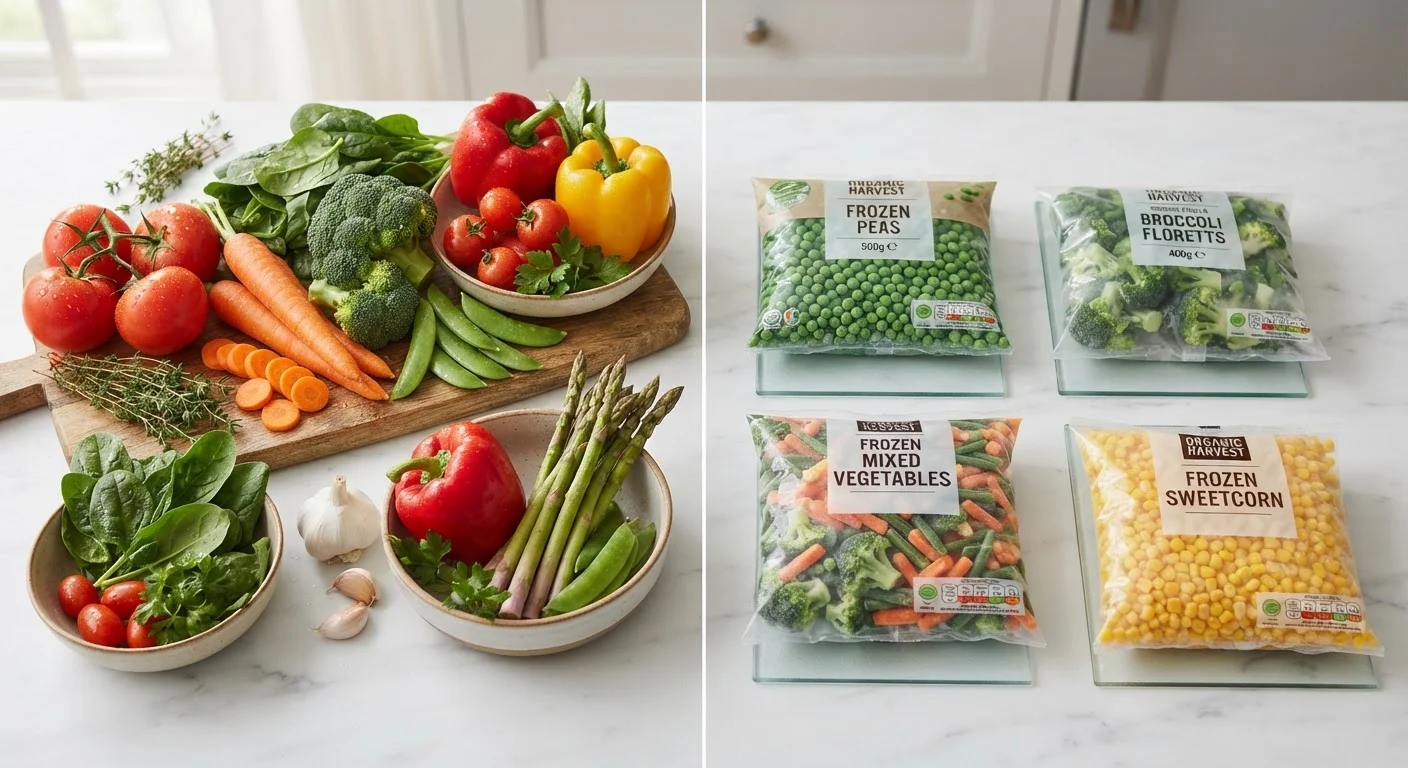
Option A
Fresh vegetables
The traditional, market-to-table choice.
Best for: Households that shop frequently and can use produce within a few days of purchase.
Option B
Frozen vegetables
The convenient, long-shelf-life alternative.
Best for: Families who want to reduce food waste, stretch their budget, and keep nutritious options on hand year-round.
If your family struggles with food waste or shops only once a week
Frozen vegetables
A long freezer shelf life means nothing gets thrown out, and the per-serving cost is consistently lower than fresh equivalents.
If you shop at a farmers market or local farm stand and cook within two days
Fresh vegetables
Produce sold close to harvest retains the most nutrients and tends to have better texture for raw or lightly cooked preparations.
If your priority is maximizing nutrient density on a tight grocery budget
Frozen vegetables
Research consistently shows frozen vegetables match or exceed fresh supermarket produce in key vitamins, at a lower cost per pound.
If you are preparing salads, raw dishes, or meals where texture matters
Fresh vegetables
Freezing changes cell structure, so thawed vegetables are softer and work better in cooked dishes than raw preparations.
What happens to nutrients from field to freezer to store
The nutritional difference between frozen and fresh vegetables is less about the form and more about time. Fresh vegetables begin losing water-soluble vitamins, particularly vitamin C and folate, as soon as they are harvested. By the time produce travels from a farm through a distribution center and sits in a supermarket display case for several days, measurable nutrient losses have occurred.
Frozen vegetables follow a different path. Most are blanched briefly in hot water or steam to deactivate enzymes that cause spoilage, then frozen within hours of harvest. Blanching does reduce some heat-sensitive vitamins, but the freezing process then halts further degradation. Studies published in nutrition journals, including research from the University of California, Davis, have found that frozen vegetables often contain comparable or higher levels of certain vitamins than fresh supermarket equivalents tested at the point of purchase.
The key variable is how "fresh" a given vegetable actually is. Produce from a local farm stand picked that morning is a different product than a bag of spinach that has traveled across the country over five days. Families who shop at farmers markets and cook within 48 hours will likely capture nutrients that supermarket fresh cannot match. For everyone else, the gap between frozen and fresh is small, and sometimes reverses in frozen's favor.
| Criterion | Fresh vegetables | Frozen vegetables |
|---|---|---|
| Nutrient retention at purchase | Variable; declines with transit time | Stable; locked in at harvest |
| Average cost per serving | Higher; seasonal price swings | Lower; consistent year-round |
| Shelf life | 2 to 7 days refrigerated | 8 to 12 months frozen |
| Food waste risk | High if not used quickly | Low; use only what you need |
| Texture for raw dishes | Ideal | Not suitable after thawing |
| Texture for cooked dishes | Good | Good to very good |
| Seasonal availability | Limited for some varieties | Available year-round |
Cost, waste, and practical value
Nutrition is only part of the equation. Cost per serving and food waste both affect whether a family actually gets the benefit of vegetables they buy. On both counts, frozen produce has a measurable advantage.
Frozen vegetables typically cost less per pound than their fresh counterparts, and that price is consistent year-round regardless of seasonal supply fluctuations. Fresh vegetables priced low in peak season can spike significantly in off months. For vegetables like peas, corn, spinach, and edamame, the frozen aisle offers dependable pricing.
Food waste compounds the cost argument. The USDA has estimated that American households discard roughly 30 to 40 percent of the food supply, and fresh produce is among the most commonly wasted items. A bag of frozen broccoli used across three separate meals wastes nothing. A head of fresh broccoli bought with good intentions but forgotten in the crisper drawer costs money without delivering any nutrition. Eating nutritiously on a limited budget becomes more realistic when the food you buy actually gets eaten.
For meal planning purposes, a freezer stocked with vegetables also reduces the need for frequent shopping trips. Planned shopping versus spontaneous grocery runs each carry different cost implications, and frozen staples support a planned approach without requiring daily attention to expiration dates.
How cooking method changes the nutrition picture
Whether vegetables are fresh or frozen matters less than how they are cooked. Boiling vegetables in large amounts of water and discarding that water removes water-soluble vitamins from both forms. Steaming, roasting, microwaving, and stir-frying all retain more nutrients than boiling because less surface area contacts water for extended time.
For frozen vegetables specifically, microwaving directly in the bag (where packaging allows) or steaming from frozen preserves more vitamins than thawing first and then boiling. Thawing on the counter also allows cellular damage from freezing to release liquid, which carries some water-soluble nutrients away if that liquid is discarded.
Choosing vegetables for nutrient density and affordability is worth considering alongside cooking technique. A nutritionally dense vegetable prepared by prolonged boiling may ultimately deliver fewer vitamins than a modest vegetable cooked quickly. Families focused on nutrition per dollar should think about cooking method as part of the same decision.
This article provides general nutrition information and is not medical advice. Consult a qualified healthcare professional for guidance specific to your health needs or those of your family members.