

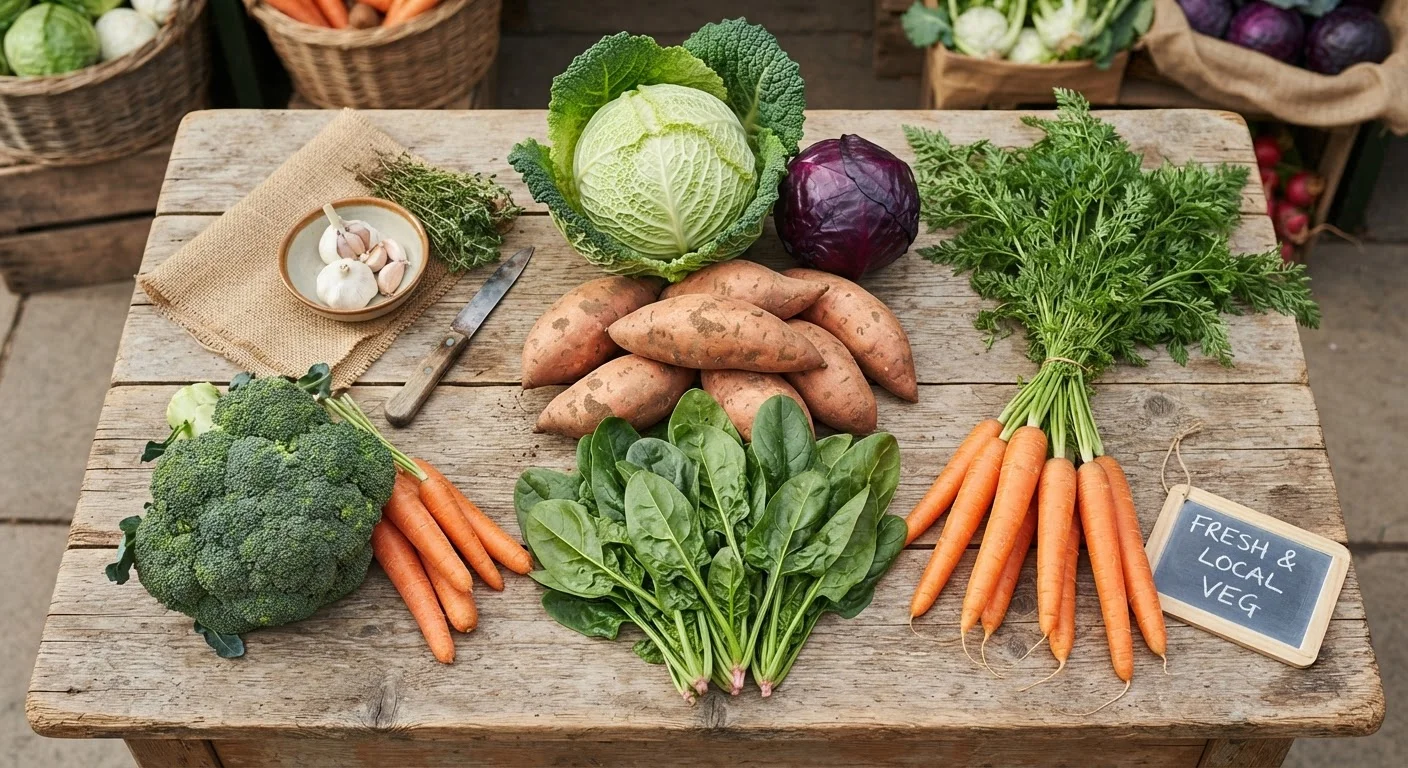
Key Takeaways
Why nutrient density matters for budget shoppers
Grocery budgets force trade-offs. When money is limited, the goal isn't simply to buy the cheapest food but to get the most nutritional return on every dollar. Nutrient density, the amount of vitamins, minerals, and fiber relative to a food's calorie and cost footprint, is the practical measure that guides that decision.
Vegetables consistently score well on this measure, yet not all vegetables are equal in cost or nutrition. Some deliver an exceptional combination of affordability and nourishment that makes them genuinely worth prioritizing. The list below focuses on vegetables that are widely available at mainstream grocery stores, inexpensive in most U.S. markets, and nutritionally dense in ways that matter to family health.
For a broader look at the idea that healthy eating requires a large budget, see our breakdown of common budget nutrition myths. And if you want to extend your savings further, pairing these vegetables with shelf-stable pantry staples keeps weekly costs low without sacrificing variety.
Cabbage
Cabbage is one of the most inexpensive vegetables by weight in U.S. grocery stores, and a single head can feed a family across several meals. It supplies vitamin C, vitamin K, folate, and fiber. Raw in slaws, quickly stir-fried, or simmered in soups, cabbage holds its texture and volume well. Shredding the whole head immediately after purchase and storing it in an airtight container keeps it usable for five to seven days, reducing waste.
A single head of cabbage can feed a family across several meals for minimal cost.
Carrots
Loose carrots, sold by the pound, are among the most consistently affordable produce items year-round. They are a reliable source of beta-carotene, which the body converts to vitamin A, along with potassium and fiber. Roasting carrots in a hot oven intensifies their natural sweetness and makes them far more appealing to children than raw versions. Carrots also hold well in soups and stews without turning mushy, making them a practical addition to low-cost one-pot meals.
Roasting carrots at high heat intensifies sweetness and improves appeal for picky eaters.
Sweet potatoes
Sweet potatoes offer an unusually broad nutrient profile for their price. They are high in beta-carotene, vitamin C, potassium, manganese, and fiber. A medium sweet potato can serve as a filling meal base on its own when topped with beans, a preparation that also pairs well with the guidance in choosing between canned and dried beans. Baking sweet potatoes whole requires no prep beyond scrubbing, and the cooked flesh stores well in the refrigerator for several days.
A baked sweet potato topped with beans is a complete, low-cost meal with minimal preparation.
Spinach
Fresh spinach is moderately priced, and frozen spinach is typically even less expensive per serving. Both forms supply iron, calcium, magnesium, folate, and vitamins A and K. Frozen spinach works especially well cooked into sauces, scrambled eggs, soups, and casseroles, where its texture after thawing is not a drawback. One cup of cooked spinach contains considerably more nutrients by volume than the same amount raw, making the frozen, cooked form a practical and economical choice for families.
Frozen spinach costs less per serving than fresh and works well in cooked dishes.
Broccoli
Broccoli is a good source of vitamin C, vitamin K, folate, and a range of antioxidant compounds. Fresh heads are usually affordable, and frozen florets cost less per ounce in most markets. Steaming or roasting preserves more water-soluble nutrients than boiling in large amounts of water. Chopped broccoli blends into pasta, rice dishes, and frittatas without dominating other flavors, which makes it useful for households cooking for mixed preferences. Frozen broccoli florets cook directly from frozen in the oven at high heat, requiring no thawing.
Roasting frozen broccoli directly from frozen is a fast, low-effort preparation that works well for weeknight meals.
Canned tomatoes
While fresh tomatoes fluctuate widely in price and quality by season, canned whole or crushed tomatoes maintain consistent cost and nutrition year-round. They are a concentrated source of lycopene, vitamin C, and potassium. Canned tomatoes form the base of soups, stews, pasta sauces, and chilis at very low cost per serving. Choosing cans labeled low-sodium or no-salt-added keeps sodium intake in a more manageable range, particularly for families cooking for children or adults watching sodium levels.
Canned tomatoes deliver consistent nutrition and low cost year-round, unlike fresh seasonal tomatoes.
Green cabbage's leafy cousin: kale
Kale tends to cost more than cabbage but still delivers a strong nutritional return per dollar, particularly when purchased as a whole bunch rather than in pre-washed bags. It is high in vitamins A, C, and K, along with calcium and fiber. Massaging raw kale with a small amount of oil and acid (such as lemon juice or vinegar) breaks down its tough cell structure and produces a tender, less bitter texture without any heat. In soups and braised dishes, kale softens considerably and absorbs surrounding flavors well.
Massaging raw kale with oil and acid removes bitterness and toughness without cooking.
Getting the most out of every purchase
Choosing the right vegetables is only part of the equation. Buying whole heads of cabbage rather than shredded bags, selecting loose carrots over baby carrot packs, and picking up sweet potatoes by the pound rather than in mesh bags typically reduces cost per serving considerably. Pre-cut and pre-packaged produce carries a significant markup that adds up quickly for families cooking multiple nights a week.
Frozen versions of many vegetables on this list, particularly spinach and broccoli, are nutritionally sound options. Research comparing frozen and fresh vegetables generally finds that freezing preserves most heat-stable and water-soluble vitamins well, and frozen bags often cost less per serving than fresh, especially outside peak season.
Reduce waste to stretch your budget further
Vegetable scraps from this list, carrot tops, broccoli stems, cabbage cores, and spinach stems, can be collected and simmered into a simple stock at no additional cost. Store scraps in a zip-top bag in the freezer until you have enough. Using the whole vegetable rather than discarding parts adds value to every dollar spent on fresh produce.
For families with outdoor or patio space, growing a few of these vegetables at home can reduce costs further. Container gardening on a budget is a practical starting point for households without a traditional garden bed.
This article is for general informational and educational purposes only and is not medical or dietary advice. Consult a qualified healthcare professional or registered dietitian before making significant changes to your or your family's diet, especially for children, pregnant individuals, older adults, or those managing a health condition.