

Key Takeaways
Why one chicken goes further than you think
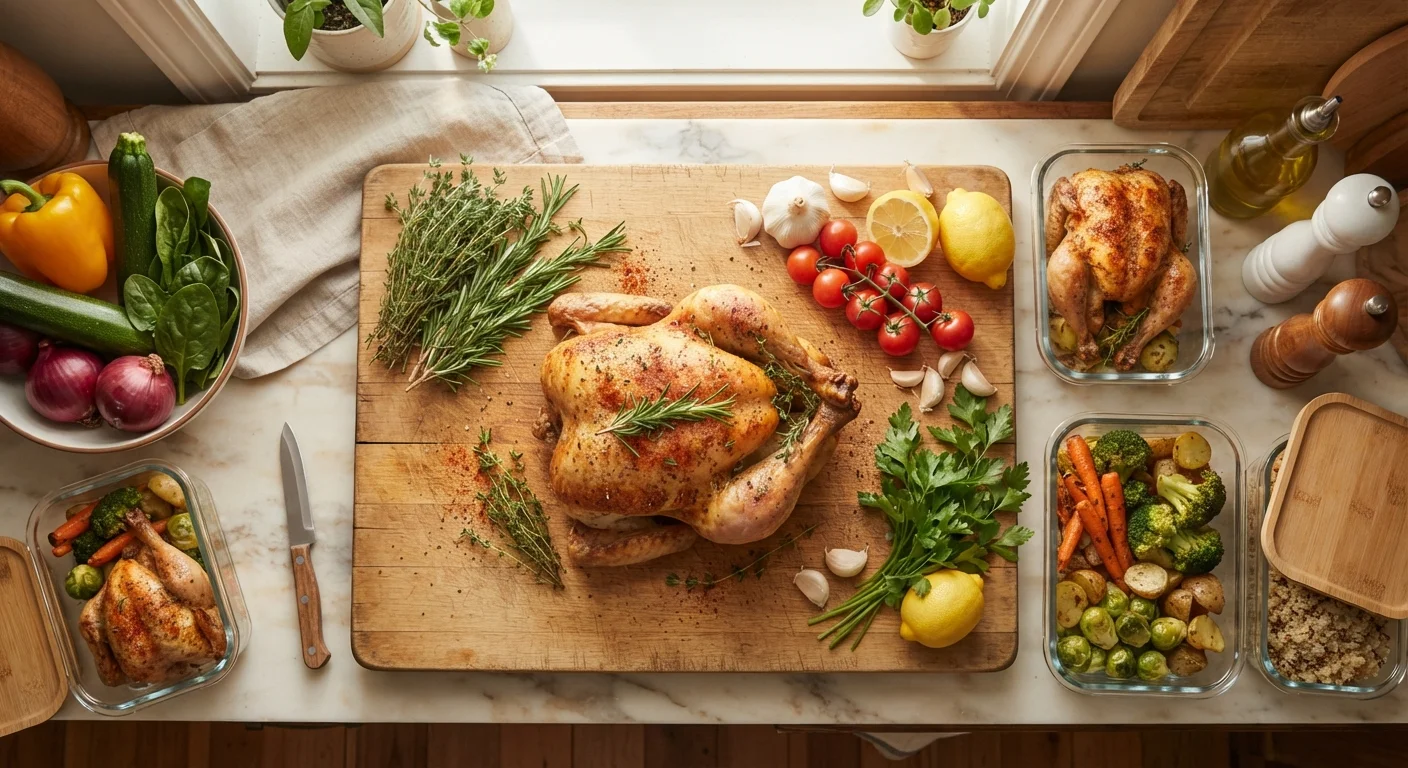
A rotisserie chicken typically weighs between three and four pounds, and most of that weight is usable. When you pull the meat systematically rather than eating straight from the bird, you can realistically yield two to three cups of shredded white meat, one to two cups of darker thigh and leg meat, and enough bones and cartilage to simmer a full pot of stock. That is the foundation for five dinners without buying a second protein.
The strategy works because each meal draws from a different part of the bird and leans on different supporting ingredients. White breast meat holds up well in salads and sandwiches where texture matters. Darker thigh meat absorbs flavors easily, so it belongs in soups and grain bowls. The stock that comes from the carcass enriches anything it touches, turning simple rice or beans into something that tastes slow-cooked.
If your family is new to structured meal planning, the beginner's guide to family meal planning covers how to build a repeatable weekly habit around this kind of anchor-ingredient approach.
What you need before you start
What you will need
Before pulling the chicken apart, set up two large bowls: one for white meat, one for dark. A third container holds the bones and skin for stock. Label everything with a marker and date before refrigerating. Meat kept in a sealed container stays safe for up to four days according to USDA food safety guidelines; stock lasts the same window or can be frozen for later.
Stock your pantry with a few staples so each meal requires only fresh produce as an add-on. For a full reference to shelf-stable ingredients that stretch a food budget, see pantry staples that reduce your weekly grocery bill.
Large stockpot
Simmers the chicken carcass into usable stock for soups and grain dishes.
Airtight food storage containers
Keeps separated chicken meat fresh and organized in the refrigerator for up to four days.
Fine-mesh strainer
Strains bones and solids from homemade stock before storage.
Kitchen scale
Helps portion meat evenly across meals so no single dish uses too much.
Five meals, step by step
The five meals below follow a deliberate sequence: lighter preparations early in the week use fresh-tasting breast meat, while heartier dishes later in the week draw on darker meat and the stock you simmer on day one or two. Follow the steps in order for the smoothest workflow.
Break down and store the chicken
Within two hours of purchasing the chicken, pull all the meat from the bones by hand. Separate white breast meat into one container and dark thigh and leg meat into another. Place the carcass, skin, and any small bones into a third container or directly into your stockpot. Refrigerate the meat immediately.
Simmer the carcass into stock
Place the carcass in a large pot and cover it with cold water. Add half an onion, a few garlic cloves, and any vegetable scraps you have on hand (celery tops, carrot peels). Bring to a boil, then reduce heat and simmer for one to two hours. Strain through a fine-mesh strainer and let cool before refrigerating or freezing.
Night one: chicken and grain salad
Combine about one cup of shredded white breast meat with cooked farro, quinoa, or brown rice. Add cucumber, cherry tomatoes, and a simple lemon-olive oil dressing. This meal is quick to assemble because the chicken is already cooked, and it requires no stove time if the grain is pre-cooked.
Night two: chicken noodle or vegetable soup
Use two cups of your homemade stock as the base. Add one cup of dark chicken meat, diced carrots, celery, and either egg noodles or small pasta. Simmer until the vegetables are tender, about 15 minutes. Season with salt, pepper, and fresh parsley if available.
Night three: chicken and white bean sandwiches
Mash one cup of rinsed canned white beans with a fork and mix with a tablespoon of olive oil, lemon juice, and garlic. Spread on toasted bread and top with shredded white chicken meat, sliced tomato, and arugula or spinach. This meal requires no cooking beyond toasting the bread.
Night four: chicken and black bean grain bowl
Warm the reserved cooked grain in a skillet with a splash of stock to revive it. Top with dark chicken meat, rinsed canned black beans, corn (canned or frozen), and a spoonful of salsa or hot sauce. Add sliced avocado if available. This is a high-fiber meal that comes together in under 10 minutes.
Night five: chicken fried rice or pasta
For fried rice, scramble two eggs in a hot pan, add cold cooked rice, remaining chicken meat, frozen peas, and a small amount of soy sauce. For pasta, toss any remaining chicken with cooked pasta, a ladle of stock, garlic, and canned tomatoes. Either version uses whatever chicken remains without waste.
Keeping food safe and waste low
The biggest risk with stretching one chicken across five days is improper storage. Cooked poultry must stay at or below 40 degrees Fahrenheit in a refrigerator. If you will not use the remaining meat by day four, freeze it in a single layer before it reaches that limit. Stock can go into ice cube trays for easy portioning, then into a freezer bag once solid.
Waste tends to creep in at the vegetable level, not the protein level. Buy only what each meal specifically needs. A well-built shopping checklist helps here. The weekly planning checklist walks through exactly how to match your ingredient list to planned meals before you enter the store.
For families who want to make this kind of planning a consistent habit rather than a one-time project, a structured weekly routine reduces the mental load of deciding what to cook each night.
This article is for general informational purposes only. Food safety timelines are based on publicly available USDA guidance; always use your own judgment and verify current guidelines with official sources.