

| Typical shelf life: dried legumes | 1 to 2 years in airtight storage (USDA Food Safety and Inspection Service) |
| Typical shelf life: whole grains | 6 to 12 months in sealed containers (USDA Food Safety and Inspection Service) |
| Lentil cook time (no soak needed) | 20 to 30 minutes |
| Canned fish protein per 3 oz serving | Approximately 20 to 25 grams (USDA FoodData Central) |
| Dried spice potency window | Up to 1 year when stored cool and dry |
| Fresh garlic storage | 2 to 4 weeks at room temperature |
Why shelf-stable ingredients change how you spend
The grocery bill doesn't inflate only at the checkout. It builds slowly through repeated small purchases of convenience foods, last-minute proteins, and single-use ingredients with no second role in any meal. A well-chosen set of pantry staples reverses that pattern by giving you a dependable base that absorbs whatever produce or protein you buy that week.
Shelf-stable foods also reduce waste. When fresh ingredients run out mid-week, a stocked pantry means you finish the week cooking instead of ordering. That shift, repeated every week, is where real savings accumulate. See how a few repeated habits quietly work against food budgets even when intentions are good.
The ingredients below aren't trendy or difficult to source. They appear in cuisines worldwide because they are genuinely useful: long-lasting, nutrient-dense, and flexible enough to anchor dozens of different meals.
| Typical shelf life: dried legumes | 1 to 2 years in airtight storage (USDA Food Safety and Inspection Service) |
| Typical shelf life: whole grains | 6 to 12 months in sealed containers (USDA Food Safety and Inspection Service) |
| Lentil cook time (no soak needed) | 20 to 30 minutes |
| Canned fish protein per 3 oz serving | Approximately 20 to 25 grams (USDA FoodData Central) |
| Dried spice potency window | Up to 1 year when stored cool and dry |
| Fresh garlic storage | 2 to 4 weeks at room temperature |
The core pantry staples and what they do
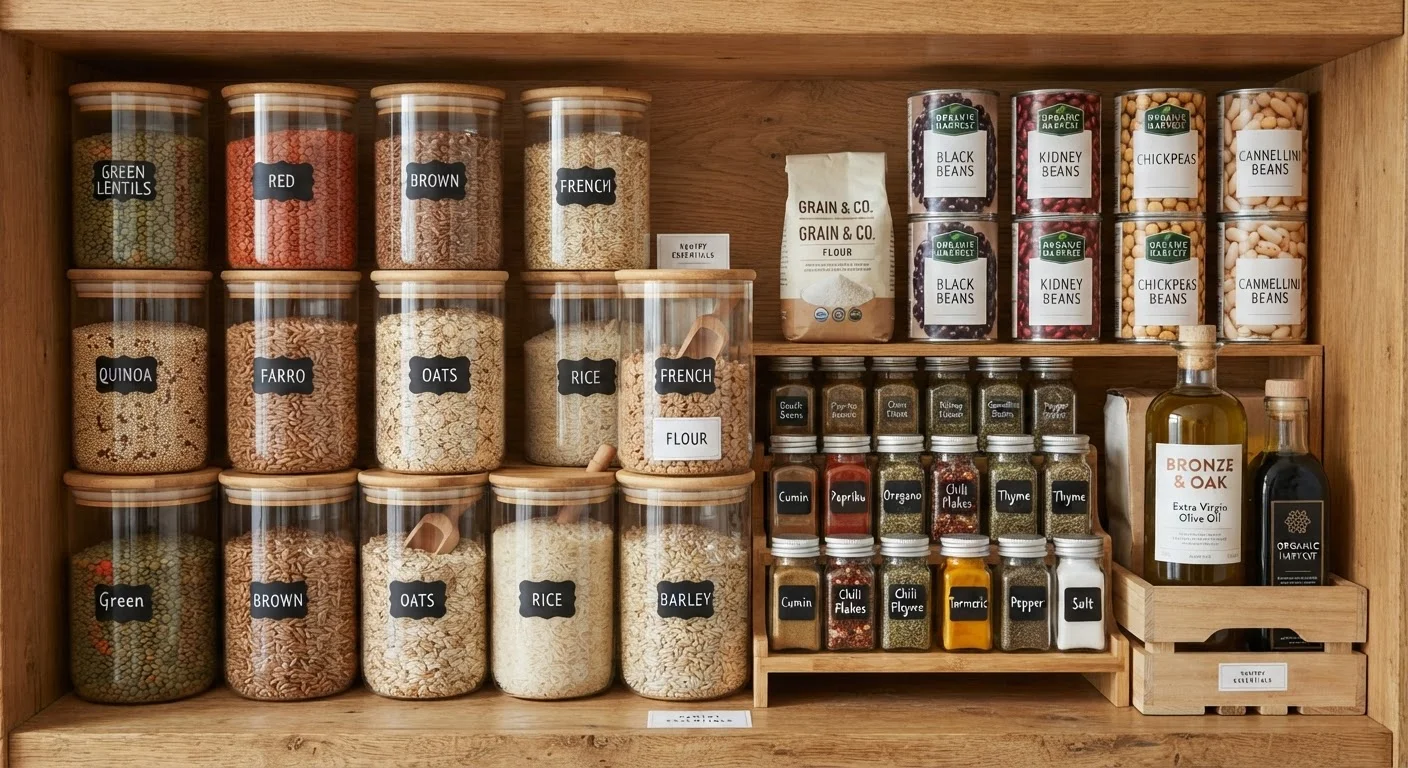
Dried legumes. Lentils, chickpeas, black beans, and pinto beans are among the most cost-effective sources of plant-based protein and fiber available. Dried versions cost significantly less per serving than canned and keep for a year or more in an airtight container. Lentils require no soaking and cook in under 30 minutes, making them practical on a weeknight. Pair them with grains or vegetables for a complete, filling meal. For a closer look at which vegetables complement legumes well on a tight budget, see vegetables that offer the most nutrition per dollar.
Whole grains. Brown rice, rolled oats, farro, and barley provide sustained energy from complex carbohydrates and meaningful amounts of fiber. A two-pound bag of rolled oats covers weeks of breakfasts at a fraction of the cost of boxed cereals. Brown rice and barley double as bases for grain bowls, soups, and side dishes. Store whole grains in sealed containers away from moisture and they hold quality for six months to a year.
Canned tomatoes. Crushed, diced, or whole-peeled canned tomatoes are year-round workhorses. They form the base of pasta sauces, soups, stews, and braises in minutes. The tomatoes are harvested at peak ripeness before canning, so nutritional quality holds up well. One can covers an entire pot of soup or sauce, spreading its cost across multiple servings.
Olive oil and neutral oils. A cooking fat with staying power is a pantry necessity. Olive oil works across sauteing, roasting, and simple dressings. Buy a size that your household will use within three to six months to preserve quality. For light-flavor applications, a neutral oil such as canola or sunflower is a lower-cost alternative.
Canned fish. Tuna, salmon, and sardines deliver protein, omega-3 fatty acids, and convenience at a low per-serving price. They require no cooking, extend salads and grain bowls, and work in quick pasta dishes. Water-packed canned fish tends to have lower sodium than oil-packed varieties.
Spices and aromatics. Garlic powder, cumin, smoked paprika, chili flakes, and dried oregano don't add much to a grocery total but transform how legumes and grains taste. Whole dried spices stay potent for about a year when stored away from heat and light. Fresh garlic and onions, which last two to four weeks stored properly, are the low-cost aromatics that anchor countless savory dishes.
Pairing these staples with a structured weekly meal plan multiplies their value. The beginner's guide to meal planning for families walks through how to build that routine from scratch.
Putting staples to work across the week
The savings from pantry staples come from repetition, not novelty. A batch of cooked lentils made on Sunday works as a taco filling on Monday, a soup base on Wednesday, and a grain bowl topping on Thursday. Cooked brown rice follows the same pattern. This approach to ingredient overlap is covered in detail in building a week of meals around one rotisserie chicken, which shows the same logic applied to a fresh protein.
Before each shopping trip, a quick pantry check prevents duplicate purchases and identifies what actually needs restocking. The weekly planning checklist makes that step faster and more consistent. Combining a stocked pantry with that kind of pre-shop routine tends to reduce impulse buying because the gaps in your week are already filled.
Storage space can be a real constraint in smaller kitchens. Vertical shelving, door organizers, and stackable containers help maximize what a compact space can hold. The article on small kitchen storage approaches covers practical, low-cost options worth considering before expanding a pantry.
This article is for informational purposes only and does not constitute medical or dietary advice. Consult a qualified healthcare professional for guidance specific to your family's nutritional needs.