

Key Takeaways
Why room-by-room works better than whole-house purges
Whole-house decluttering days sound productive but usually end with piles redistributed rather than removed. Tackling one room per session gives you a visible before-and-after, which is motivating enough to start the next session. It also prevents the common trap of moving clutter from room to room without actually making decisions about it.
The room-by-room method fits naturally into a weekly household routine because you can slot one room into a Saturday morning rather than blocking out an entire weekend. For families with young children or demanding schedules, short wins matter more than ambitious plans that never happen.
Before starting, gather your tools and set a session length. Thirty minutes is enough for a bathroom or entryway. A kitchen or bedroom may need two or three sessions spread across different days.
What you will need
The four-box sorting method
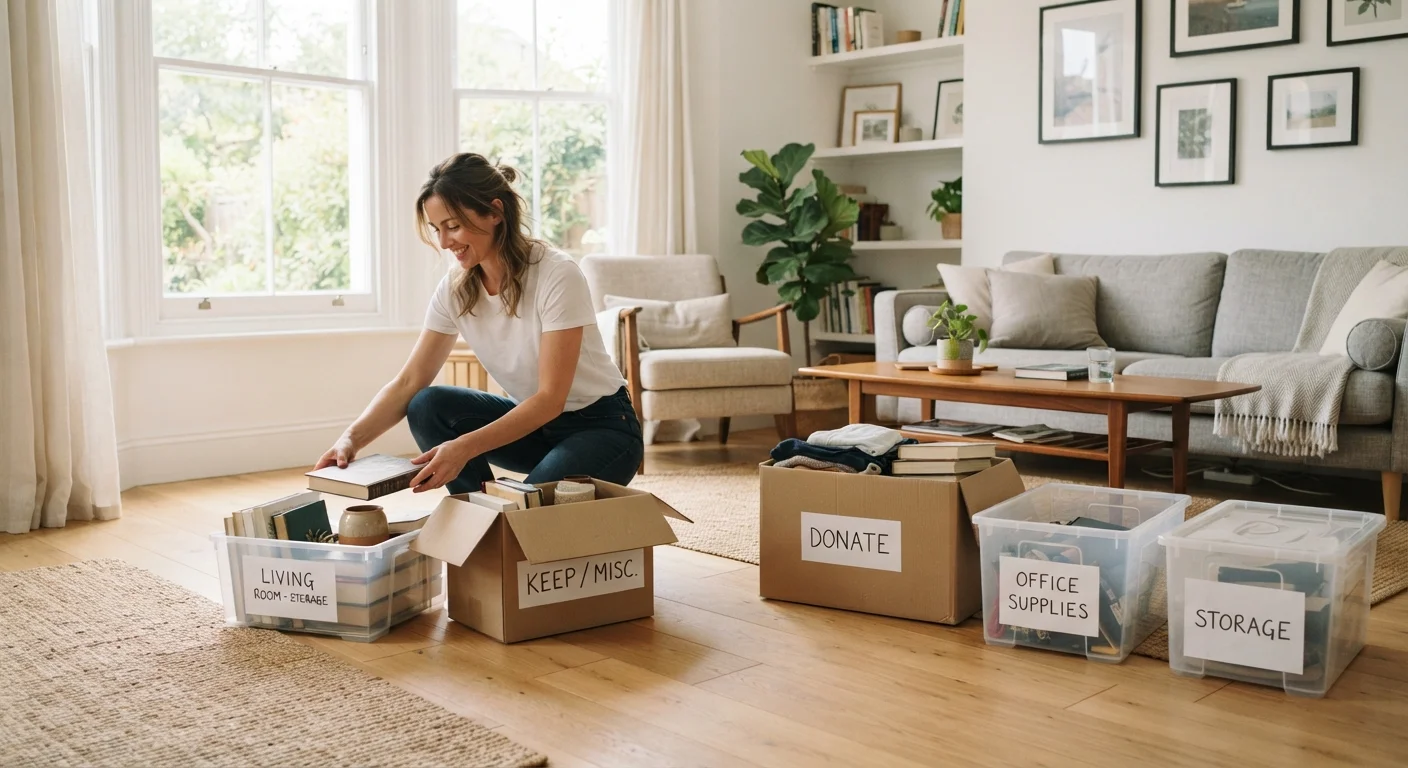
Every item in the room gets placed into one of four categories without exception: Keep, Donate, Trash, or Relocate. The Relocate box is for things that belong in another room and need to be returned there at the end of the session, not mid-session. Moving items mid-session breaks focus and drags out the process.
Apply a simple test to anything you hesitate over: Has this been used in the last 12 months? If no, it goes to Donate or Trash unless it has a specific future date attached to it (seasonal gear, for example). If yes, it stays in Keep unless storage space will not allow it.
Do not create a Maybe box. Maybe boxes reliably become permanent storage for things that should have been donated months earlier.
Four sorting boxes or bags
Physically separate items into keep, donate, trash, and relocate categories during each session.
Timer
Keep sessions fixed and finite so decluttering does not consume an unplanned afternoon.
Notepad or notes app
Log donated items by category and approximate quantity for household records.
Masking tape and marker
Label boxes, shelves, or zones clearly so the whole family understands the sorting system.
Room-by-room priorities and what to focus on
Kitchen
Duplicate utensils, expired pantry items, and appliances used fewer than twice a year account for most kitchen clutter. Pull everything out of one cabinet at a time rather than opening all cabinets at once. For practical ideas on making the most of the space you recover, see low-cost kitchen storage approaches after you have cleared the excess.
Bedrooms
Clothing is the main offender. The 12-month rule applies cleanly here. Involve each family member in sorting their own clothes rather than doing it for them: this avoids conflict and teaches decision-making habits to children. Nightstands and under-bed areas are secondary priorities once wardrobes are handled.
Living areas
Flat surfaces collect clutter faster than any other area. Clear every horizontal surface completely, then return only what genuinely belongs there. Books, magazines, and cords are the most common culprits after general miscellany.
Bathrooms
Expired medications, near-empty product bottles, and duplicate grooming tools are the focus. Check expiry dates on over-the-counter products before discarding. Proper disposal of expired medications usually involves pharmacy take-back programs rather than the household bin: check your local guidelines.
Entryway and mudroom
This zone sets the tone for the whole house. Shoes, bags, coats, and sports equipment tend to pile here. Limit items to what the family actually uses in the current season and relocate the rest to appropriate storage.
Making progress stick without buying more storage
New storage bins and organizers are tempting, but buying them before decluttering usually means organizing clutter rather than removing it. Work with what you already have until a room is fully sorted. Only then assess whether a specific storage gap genuinely exists.
Assign a home to every category of item that returns to a room. Clutter accumulates when items lack a designated place. A basket that already sits on a shelf, or a drawer that has been cleared, often provides all the storage needed once the excess is gone.
Building habits that prevent re-accumulation matters as much as the initial clear-out. A structured weekly routine with a short reset task (10 minutes to return relocated items and clear flat surfaces) can maintain the result without another major effort.
Prevent re-accumulation with a one-in, one-out rule
Once a room is cleared, try applying a simple one-in, one-out rule: when a new item enters a space, an equivalent item leaves. This is not a strict rule for every household purchase, but applying it to clothing, toys, and kitchen gear keeps volumes stable without ongoing effort. It works especially well for children's bedrooms, where items tend to accumulate quickly.
For families managing a full schedule, pairing the decluttering habit with other regular tasks (meal planning, grocery prep) reduces the mental load of organizing home life. See a weekly grocery planning checklist for an example of how a short, structured routine prevents waste and saves time.