

| Ingredient list order | Highest to lowest concentration (U.S. FDA cosmetic labeling requirements) |
| USDA Organic threshold | At least 95% certified organic ingredients (USDA National Organic Program) |
| Typical mascara PAO | 3 to 6 months after opening (General industry standard) |
| "Natural" claim regulation | Not regulated by FDA for cosmetics (U.S. FDA cosmetics guidance) |
| One-percent threshold | Ingredients below 1% may appear in any order (U.S. FDA 21 CFR Part 701) |
| SPF regulation | Regulated as an over-the-counter drug by the FDA (U.S. FDA monograph system) |
How ingredient lists actually work
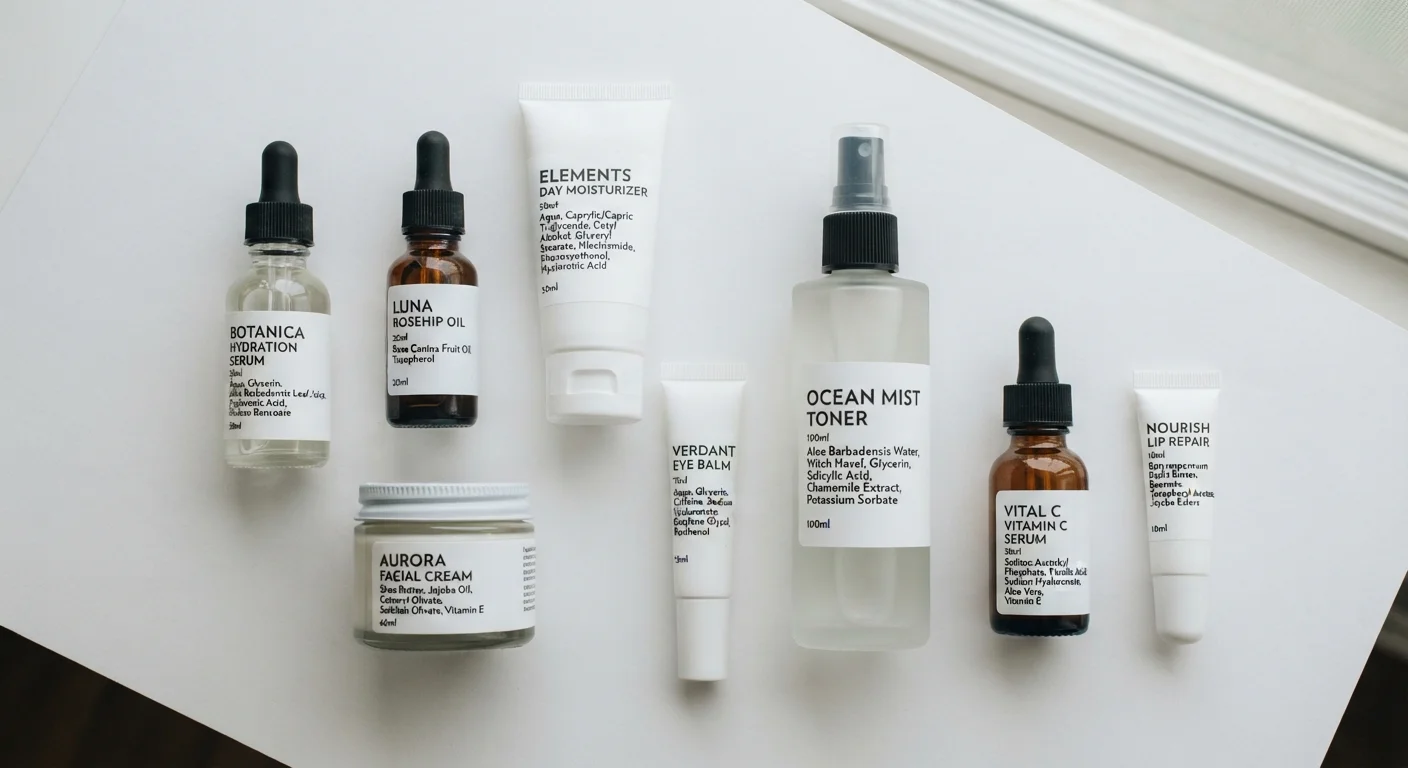
The ingredient list on any beauty product sold in the United States follows a specific legal order: ingredients appear from highest concentration to lowest. That means the first five or six ingredients make up the bulk of what you are putting on your skin. Everything below about one percent can appear in any order the manufacturer chooses, which is why fragrance and preservatives often show up near the bottom even though they matter significantly for sensitive skin.
Ingredients are listed using INCI names, a standardized naming system established to keep labeling consistent across countries. Water, for example, always appears as Aqua. Plant-derived ingredients carry their Latin botanical name in italics alongside or instead of the common name. If you see Butyrospermum parkii, that is shea butter. Learning a handful of these translations removes a lot of label confusion quickly.
If a product makes a claim about a specific active ingredient, check where that ingredient actually falls on the list. A serum marketed around a particular antioxidant that appears near the end of a long list likely contains only a trace amount. For context on how this applies to sun protection products specifically, see what SPF labels actually tell you.
INCI
International Nomenclature of Cosmetic Ingredients. A standardized system for naming cosmetic ingredients used on product labels worldwide, so the same ingredient carries the same name across different countries and brands.
Period After Opening (PAO)
A label symbol showing how many months a product remains effective after it is first opened. It appears as a small open jar icon with a number and the letter M.
Broad-spectrum
An FDA-regulated claim on sunscreen indicating the product protects against both UVA and UVB radiation, as verified by a required standardized test.
Batch code
A manufacturer-assigned alphanumeric code stamped on packaging that identifies when and where a product was made. It is used for quality control and product recalls.
Preservative system
The combination of ingredients in a formula that prevent microbial growth and extend shelf life. Common preservatives include phenoxyethanol, sodium benzoate, and potassium sorbate.
Certifications, claims, and what they are regulated to mean
Label claims fall into two categories: regulated and unregulated. Regulated claims have a legal definition enforced by a government body. Unregulated claims are marketing language with no required standard behind them.
In the U.S., SPF ratings are regulated by the FDA. Organic on a personal care product is regulated by the USDA only when the product carries the USDA Organic seal, which requires at least 95 percent certified organic agricultural ingredients. The word natural, by contrast, has no regulated definition in cosmetics and can appear on any product regardless of formulation. The same is true for clean, non-toxic, and dermatologist-tested.
Third-party certifications add a layer of verification because an outside organization audits the claim. Look for seals from organizations such as the Environmental Working Group, Leaping Bunny (cruelty-free), or NSF International (organic content) if those values matter to your purchasing decisions. The seal does not automatically mean a product outperforms others without it; it means the claim was independently checked. For a deeper look at how ingredient origin affects actual safety and performance, the science behind natural versus synthetic ingredients covers the research clearly.
Expiration codes and the period-after-opening symbol
Beauty products carry two different time indicators, and many shoppers confuse them. The first is a manufacturing expiration date, sometimes printed as EXP followed by a date, or stamped as a batch code on the bottom of the packaging. Batch codes are not always consumer-readable without a lookup tool, but they let manufacturers trace production lots for recalls.
The second indicator is the Period After Opening (PAO) symbol: a small open jar icon with a number and the letter M inside it. 12M means the product is considered effective and safe to use for twelve months after you first open it. PAO periods vary widely: mascara is typically three to six months, while a sealed facial oil may carry a twenty-four-month PAO.
Using a product past its PAO is not automatically dangerous, but preservative systems degrade over time, and oxidized formulas may be less effective or more likely to irritate skin. Writing the opening date on the bottom of a product with a marker is a simple, no-cost habit that prevents guessing. Once you understand labels well and know your skin, choosing products becomes more straightforward. The logical next step is understanding your skin type so label reading connects directly to what your skin actually needs.
| Ingredient list order | Highest to lowest concentration (U.S. FDA cosmetic labeling requirements) |
| USDA Organic threshold | At least 95% certified organic ingredients (USDA National Organic Program) |
| Typical mascara PAO | 3 to 6 months after opening (General industry standard) |
| "Natural" claim regulation | Not regulated by FDA for cosmetics (U.S. FDA cosmetics guidance) |
| One-percent threshold | Ingredients below 1% may appear in any order (U.S. FDA 21 CFR Part 701) |
| SPF regulation | Regulated as an over-the-counter drug by the FDA (U.S. FDA monograph system) |