

Key Takeaways
Skin type
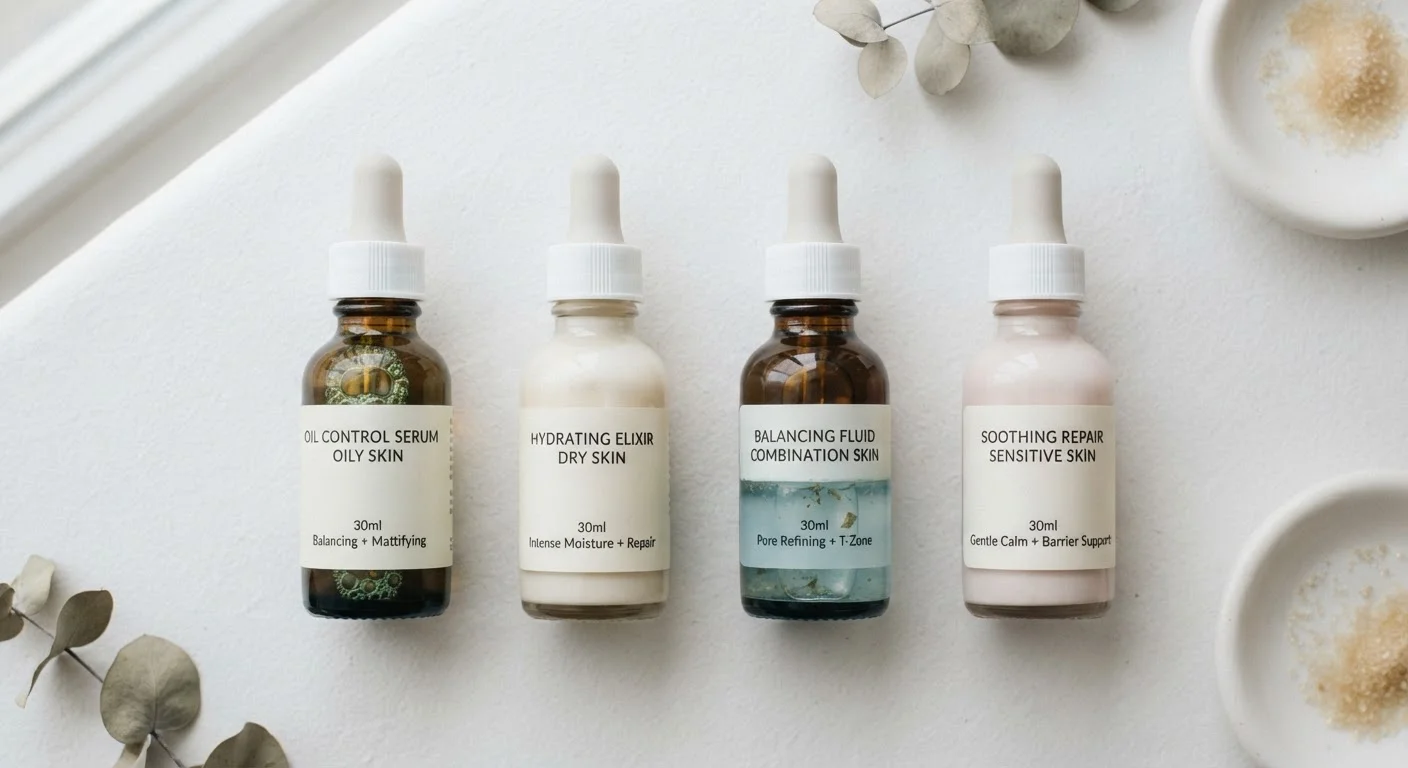
Skin type describes how your skin naturally behaves on its own, before you apply any product. It is determined mainly by how much sebum (oil) your sebaceous glands produce and how well your skin barrier holds in moisture. The four commonly recognized categories are oily, dry, combination, and sensitive.
Skin type is distinct from skin condition. Conditions such as acne, hyperpigmentation, or dehydration can appear across all skin types and may change with seasons, hormones, or environment.
Why identifying your skin type matters
Buying a product without knowing your skin type is like buying shoes without knowing your size. The product may technically work for someone, just not for you. This mismatch is one of the most common and most avoidable ways people overspend on skincare.
Skin type tells you which formulas are likely to sit well on your face, which active ingredients to look for, and which to approach with caution. It is the filter that makes reading a product label genuinely useful. For a deeper look at how to decode those labels, see our field guide to beauty product labels.
Skin type is not a permanent sentence. Age, hormonal changes, climate, and even your current routine can all nudge it in a new direction. Checking in with how your skin behaves every few months is worthwhile, especially if a routine that used to work stops delivering results.
Oily skin: what it is and what it needs
Oily skin produces more sebum than the skin needs to stay protected. The result is a visible sheen, often within an hour or two of washing. Pores tend to appear larger because they stretch to accommodate excess oil, and blackheads or breakouts are more common.
The goal for oily skin is not to strip oil away entirely. Harsh cleansers that remove all surface oil signal the skin to produce even more to compensate. A gentle, foaming or gel cleanser used twice a day is enough. Moisturizer is still needed; lightweight, water-based formulas absorb quickly without adding grease.
Ingredients worth seeking out include niacinamide, which can help regulate sebum production over time, and salicylic acid, a beta-hydroxy acid (BHA) that dissolves inside the pore to clear congestion. Both appear in many affordable formulas.
~50%
Adults who self-report sensitive skin
Multiple consumer surveys across North America and Europe consistently find that roughly half of adults describe their skin as sensitive or reactive.
No. 1
Fragrance as the leading skin allergen
The American Contact Dermatitis Society has repeatedly identified fragrance mix as among the most common causes of contact allergic reactions in skincare users.
Dry skin: what it is and what it needs
Dry skin produces less sebum and loses water from the surface more quickly than average. It can feel tight after cleansing, appear dull or flaky, and show fine lines more readily because the skin's surface lacks adequate moisture and lipids to stay plump.
The priority for dry skin is barrier support. That means using a cream or balm-textured moisturizer with ingredients that both attract and hold water: humectants such as glycerin or hyaluronic acid pull moisture in, while occlusives such as petrolatum or shea butter seal it there. Applying moisturizer while skin is still slightly damp improves absorption.
Cleansers should be low-foam or cream-based. Foaming cleansers formulated for oily skin often strip dry skin further. Exfoliation is useful but should be kept infrequent, once or twice a week at most, and gentle chemical exfoliants (lactic acid is a common choice) are less disruptive than scrubs.
Combination skin: navigating two zones at once
Combination skin has an oily T-zone (forehead, nose, and chin) alongside normal to dry cheeks. This pattern is actually the most common skin type, though it often gets described as difficult because a single product rarely addresses both zones equally well.
A practical approach is to simplify your routine to formulas that work reasonably well across both zones rather than layering multiple products. Gel moisturizers or light lotions often hit a middle ground. Some people find it useful to apply a slightly richer product to the cheeks and a lighter one to the T-zone, but this does not need to involve buying two separate moisturizers.
Cleansing twice daily with a balanced, non-stripping formula helps without sending the oily zones into overdrive. Alcohol-based toners and very heavy creams are worth avoiding. For affordable ingredient options that work across combination skin, skincare ingredients that deliver results without the markup is a useful next step.
Sensitive skin: reactivity as a baseline trait
Sensitive skin reacts to triggers that other skin types tolerate without issue. Those reactions can include stinging, redness, itching, or a burning sensation, and they occur because the skin barrier is more permeable than average, allowing irritants to reach nerve endings and immune cells more easily.
Fragrance is the most common culprit across both synthetic and natural formulations. Essential oils, alcohol denat, and high concentrations of certain acids also frequently cause reactions. Reading ingredient lists carefully, starting with fewer active ingredients, and patch testing new products for 24 to 48 hours before full application are habits that reduce the risk of a flare.
Sensitive skin does not automatically mean delicate or ineffective skincare. Many people with sensitivity can use well-formulated products containing niacinamide, azelaic acid, and low-concentration retinoids without trouble; the key is introducing them gradually. For context on how ingredient origins (natural versus synthetic) affect safety and reactivity, the science behind natural and synthetic skincare ingredients offers a clear-eyed look at the evidence.
This article is for informational purposes only and is not a substitute for advice from a licensed dermatologist or healthcare professional. If you have persistent skin concerns or reactions, consult a qualified provider.
Putting skin type knowledge to work
Once you know your skin type, you can move past marketing language and focus on what a product actually contains. A moisturizer labeled 'for all skin types' may still contain heavy waxes that clog pores on oily skin, or alcohol that strips dry skin further. The label on the front of the bottle matters far less than the ingredient list on the back.
Knowing your type also helps you recognize when a product is working against you. If your skin feels tight all day after cleansing, your cleanser is probably too harsh, regardless of what the packaging promises. If moisturizer sits on top of your skin without absorbing, the formula is likely too occlusive for your oil level.
Building a routine around your actual skin type, rather than aspirational claims or marketing categories, is also how you avoid buying products you do not need. For a closer look at common purchases that rarely add value, skincare spending you can probably skip is worth reading before your next shopping trip.