

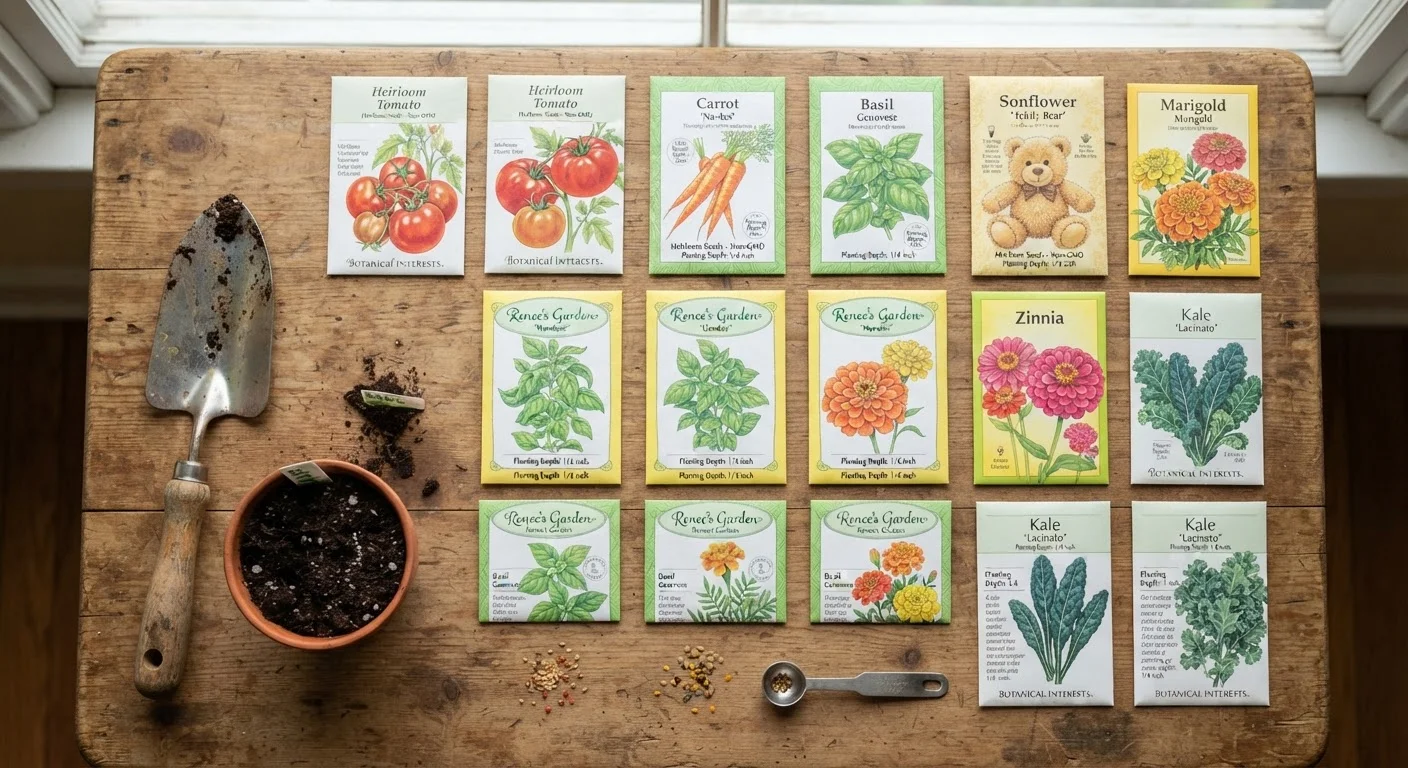
What all those numbers actually mean
A seed packet is a compressed instruction manual. The front gives you the common name and sometimes a photo. The back is where the real information lives, and knowing how to read it saves you from planting at the wrong time, spacing plants too close, or wondering why your seeds never sprouted.
The most important figures are days to germination, days to maturity, planting depth, and spacing. Each one answers a specific question. Days to germination tells you how long to wait before worrying that something went wrong. Days to maturity is counted from transplant date for seedlings started indoors, or from direct sow date for seeds planted straight into the ground; the packet should specify which.
Planting depth is expressed in inches or fractions of an inch. A common rule of thumb holds that seeds should be planted at a depth roughly two to three times their diameter, and most packets follow that logic. Spacing covers two measurements: the distance between individual plants in a row, and the distance between rows. Both matter for airflow and root competition.
Germination rate and what it tells you about quantity
Germination rate is the percentage of seeds in the packet that are expected to sprout under good conditions. A packet listing 85% means roughly 85 out of 100 seeds should germinate if soil temperature, moisture, and light are appropriate. Rates above 80% are considered good for most vegetables; some wildflower mixes run lower.
Use the germination rate to figure out how many seeds to sow. If you need 20 pepper plants and the packet shows a 70% rate, planting 30 seeds gives you a reasonable buffer. Overseeding by 20 to 30 percent is standard practice when germination rates are below 80%.
Older seeds germinate less reliably. Check the packed-for or test date printed on the packet; most vegetable seeds remain viable for two to four years if stored in a cool, dry place. Onion and parsnip seeds lose viability faster, typically within one to two years. Tomato and squash seeds often stay viable longer.
If you are gardening in containers, germination rate helps you avoid wasting seed in a limited space. For more on matching plant types to pots, see container gardening on a budget.
Hardiness zones, sun requirements, and timing codes
Many packets include a USDA Plant Hardiness Zone range. This tells you whether the plant can survive winter in your region, which matters for perennials but is less relevant for annual vegetables grown in a single season. If you want to compare how zone guidance applies to perennials versus annuals in your planning, understanding perennials vs. annuals covers that distinction directly.
Sun symbols are usually straightforward: a full sun icon means six or more hours of direct sun per day, part sun or part shade means three to six hours, and full shade means fewer than three. Ignore this at your own risk; planting a full-sun tomato in partial shade will produce foliage but little fruit.
Timing codes vary by manufacturer but typically look like "DS" (direct sow), "SI" (start indoors), or "T" (transplant). A packet might read: "SI 6-8 weeks before last frost; transplant after danger of frost passes." Last frost dates depend on your zip code. The USDA and many university extension services publish average last frost dates by region at no cost.
Days to maturity
The number of days from transplanting (or direct sowing, if specified) until a plant produces a harvestable crop. It is an average under typical conditions, not a guarantee.
Germination rate
The percentage of seeds in a batch expected to sprout given appropriate temperature, moisture, and light. A higher rate means fewer seeds need to be planted to hit a target plant count.
Open-pollinated
Seeds produced through natural pollination that grow true to the parent plant. Saved seed from open-pollinated varieties reliably produces the same plant the following season.
F1 hybrid
A first-generation cross between two distinct parent plants, bred for specific traits like disease resistance or uniform yield. Seeds saved from F1 plants do not reliably produce the same traits.
Direct sow (DS)
Planting seeds directly into outdoor garden soil rather than starting them in trays indoors first. Some crops, like carrots and beans, do better with direct sowing than transplanting.
Hardiness zone
A USDA geographic category based on average annual minimum winter temperatures. It guides whether a perennial plant can survive year-round in a given location.
Putting the information to practical use
Once you know your last frost date, work backwards using the days listed on the packet. For a tomato that needs 70 days to maturity and should be started indoors 6 weeks before transplanting, you need to count 6 weeks back from your last frost date to find your indoor sow date, then add 70 days forward from transplant to estimate harvest.
Spacing affects yield more than most beginners expect. Crowded plants compete for water and nutrients, and poor airflow between them increases disease pressure. When a packet says "12 inches apart, rows 24 inches apart," that measurement is a minimum, not a suggestion to exceed only if you have extra room.
Seed packets are also one of the cheapest ways to start a garden. A single packet of most vegetables costs well under two dollars and contains far more seeds than a family typically needs in one season. Splitting packets with a neighbor, or saving seeds from open-pollinated varieties at the end of the season, stretches that value further. Hybrid varieties are marked "F1" on the packet; seeds saved from F1 plants will not grow true to the parent, so saving seed only makes sense with open-pollinated or heirloom varieties.