

Key Takeaways
Start here
Why container gardening works for small spaces
Next
Choosing containers without spending much
Then
Which plants do well in containers
Build on it
Soil, watering, and feeding on a budget
Avoid pitfalls
Common mistakes that cost money
Why container gardening works for small spaces
Container gardening lets you grow plants wherever you have a surface and some sunlight: a balcony, a stoop, a concrete patio, or a windowsill. No yard is required, and you can start as small or as large as your budget allows.
The practical advantages go beyond space. Containers let you control soil quality precisely, move plants to follow the sun or dodge frost, and avoid the weed pressure that in-ground plots accumulate. Families who rent can garden without touching the landlord's lawn. If you want to compare container growing with other approaches, see our raised bed vs. in-ground garden breakdown for a side-by-side look at cost, maintenance, and yield.
The main trade-off is that containers dry out faster than ground soil and need more consistent watering. That is manageable once you build the habit.
Potting mix
A bagged growing medium designed for containers. It stays loose and drains well, unlike garden soil, which compacts and restricts roots when used in pots.
Drainage holes
Openings in the bottom of a container that let excess water escape. Without them, roots sit in waterlogged soil and rot.
Slow-release fertilizer
A granular fertilizer that breaks down gradually over weeks or months, feeding plants steadily without frequent reapplication.
Compact variety
A plant bred to stay small and produce well in limited space. Often labeled 'dwarf' or 'patio' on seed packets and suited to container growing.
Self-watering container
A planter with a built-in water reservoir at the bottom. The plant draws moisture up through the soil as needed, reducing how often you need to water.
Choosing containers without spending much
The container itself does not need to be a purpose-built planter. A 5-gallon bucket, a wooden crate lined with landscape fabric, a colander, a cracked stockpot, or a large yogurt tub can all hold plants. The only requirement is drainage: punch or drill holes in the bottom of anything that lacks them.
When sizing containers, root depth matters more than width. Shallow-rooted plants like lettuce and herbs grow fine in 6-inch pots. Tomatoes and peppers need at least 5 gallons of soil volume. A wider container also helps in hot climates because more soil mass stays cooler and retains moisture longer.
Plastic pots hold moisture better than terracotta, which wicks water out through the walls. That is useful in hot, dry summers. Terracotta is heavier and more prone to cracking in frost but breathes well in humid conditions. Either works; choose based on your climate and what you have on hand.
Joining a local buy-nothing group, checking thrift stores, or asking neighbors for castoffs is a reliable way to accumulate containers at no cost.
Which plants do well in containers
Some plants are genuinely well-suited to confined root space; others struggle no matter how large the pot. Sticking to the right plants at the start prevents wasted money on seeds or transplants that underperform.
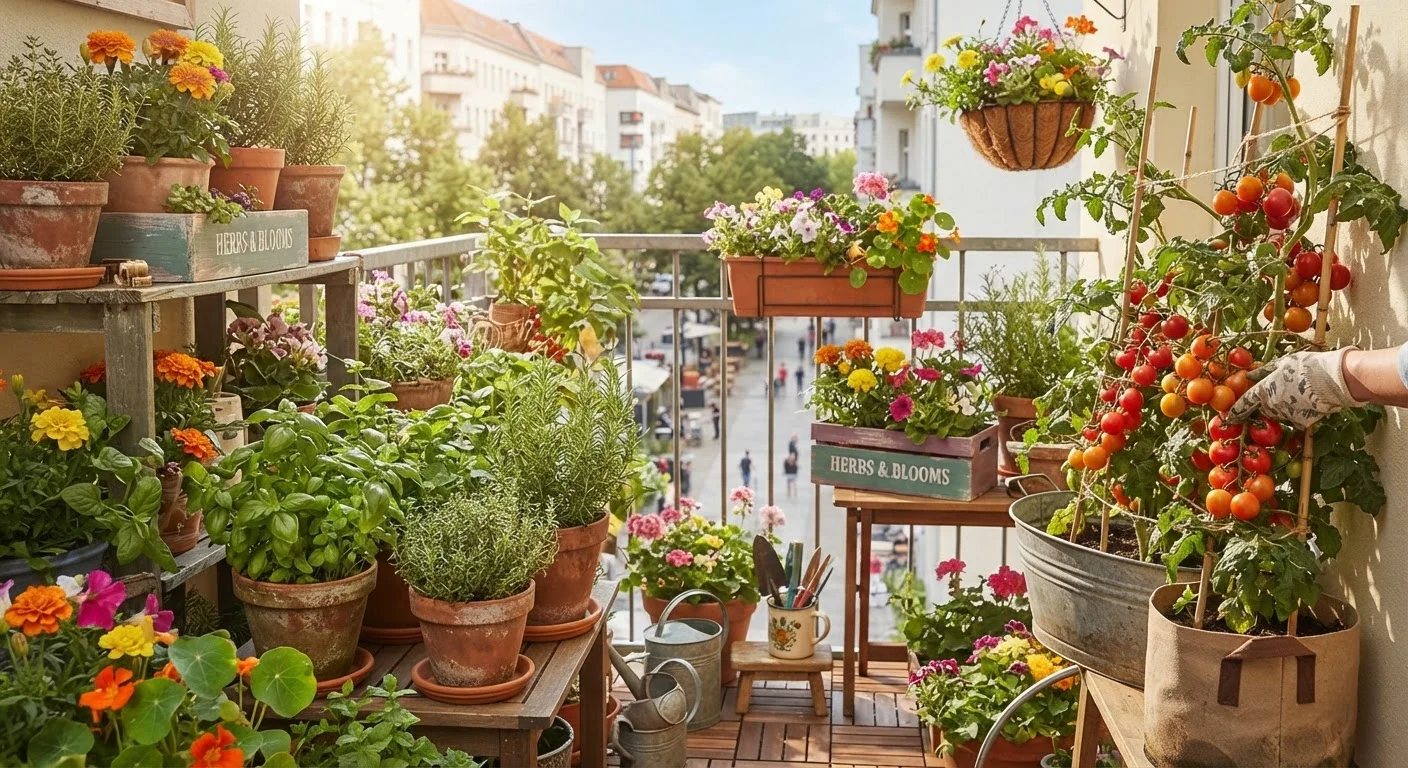
- Herbs: basil, chives, cilantro, parsley, and mint grow easily in small pots. Mint spreads aggressively underground, so it does better in its own container rather than shared with other plants.
- Leafy greens: lettuce, spinach, arugula, and kale all do well in containers as shallow as 6 to 8 inches. You can harvest outer leaves repeatedly, which stretches a single planting over many weeks.
- Cherry tomatoes: compact varieties produce well in 5-gallon containers with a simple stake or cage for support.
- Peppers: both sweet and hot types adapt well to containers and tolerate the heat that builds up in pots on sunny surfaces.
- Radishes and green onions: fast-maturing and shallow-rooted, good for small pots or as gap-fillers between larger plants.
Growing your own herbs and greens can meaningfully reduce grocery spending over a season. For context on which vegetables deliver the most nutritional value per dollar at the store, our vegetable nutrition-per-dollar guide is a useful companion read.
For longer-term planning, understanding which plants come back each year and which need replanting helps you budget better. Our guide on perennials vs. annuals covers this in detail.
Soil, watering, and feeding on a budget
Garden soil from the ground compacts in containers, restricts root growth, and drains poorly. Bagged potting mix is worth the cost because it stays loose and drains well. A large bag typically covers several medium-sized containers and can be reused the following season with some amendment.
Watering frequency depends on container size, plant type, and weather. The simplest rule: stick a finger an inch into the soil. If it feels dry, water thoroughly until water runs out the drainage holes. If it still feels moist, wait. Self-watering containers with a reservoir at the bottom reduce watering frequency and are worth considering if you travel or forget to water consistently.
Group containers to reduce watering
Placing containers close together slows moisture loss by reducing airflow around individual pots and creating a slightly cooler microclimate. Grouping also makes watering faster because you cover one area rather than walking between scattered pots. A saucer under each container catches runoff and lets roots absorb extra moisture between waterings.
Plants in containers deplete nutrients faster than in-ground plants because watering flushes them out. A slow-release granular fertilizer mixed into the potting mix at planting time is an economical way to feed plants across a whole season without weekly applications. Liquid fertilizers work faster but need more frequent use and generally cost more per plant over a season.
Compost made at home is the lowest-cost soil amendment available. Even a small countertop compost setup produces material you can mix into potting soil each year.
Common mistakes that cost money
Most container garden failures come down to a few repeatable errors. Avoiding them from the start protects your investment in seeds, soil, and containers.
Overwatering kills more container plants than drought. Waterlogged roots rot, and the plant declines faster than it would if left slightly dry. Always check soil moisture before watering rather than watering on a schedule.
Skipping drainage holes creates the same problem. Any container without holes needs them before soil goes in.
Undersizing containers for the plant is common with tomatoes and peppers. A small pot dries out within hours on a hot day and stresses plants that need consistent moisture to set fruit.
Starting with too many plants spreads attention thin and makes it harder to learn what each one needs. Two or three containers managed well produce more than ten neglected ones.
Container gardening pairs well with other low-cost family activities. If you are looking for more ways to stretch your household budget across different categories, our guide to low-cost family entertainment covers a broad range of options.