

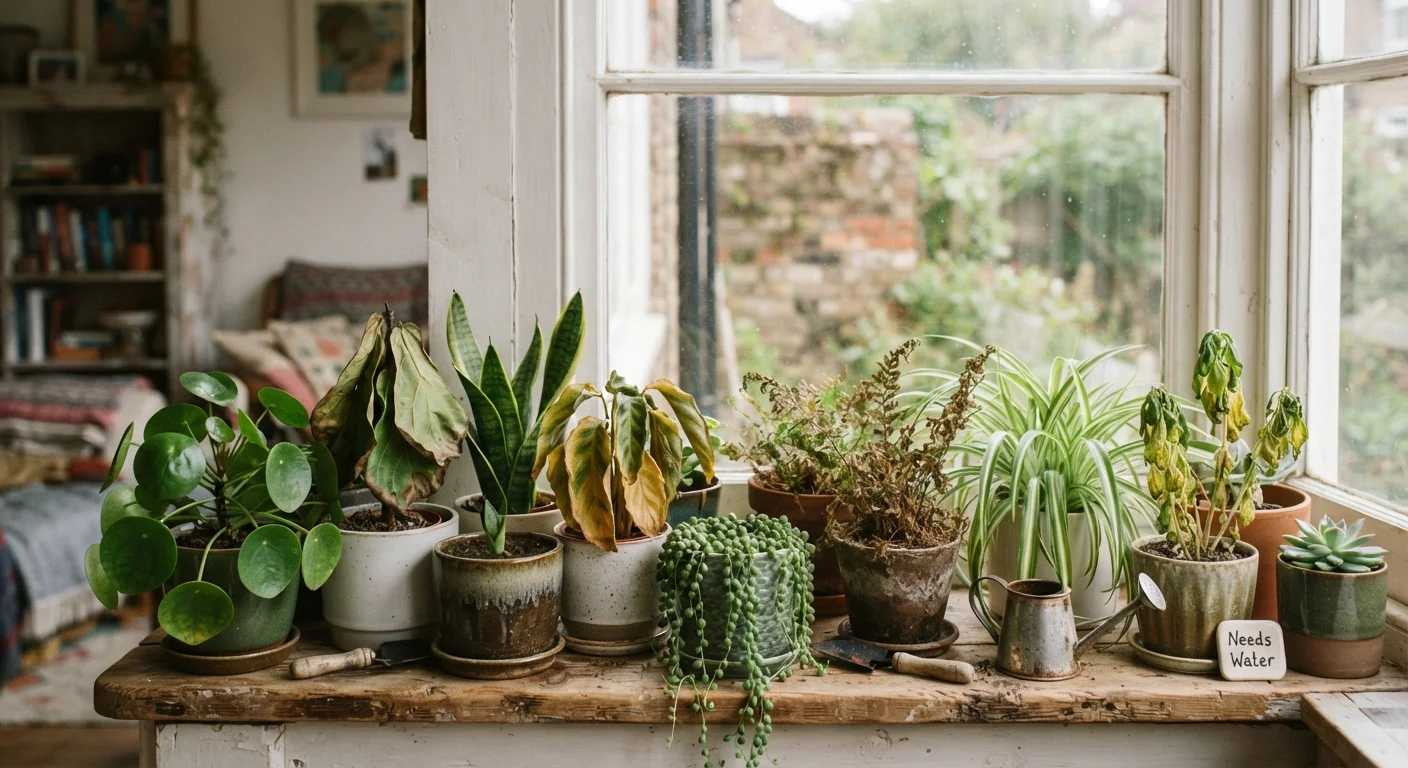
Key Takeaways
Why good intentions often kill houseplants
Many families buy a plant, follow what feels like common sense, and watch it decline within weeks. The frustrating part is that the most damaging habits come from trying to care too much. Overwatering, over-fertilizing, and moving plants around to find a "better" spot are all well-meaning actions that consistently backfire.
Understanding what actually goes wrong, and why, is more useful than memorizing a watering schedule. Plants signal stress clearly if you know what to look for. Yellowing leaves, mushy stems, and dry, cracked soil are all diagnostic clues that point to specific fixable problems.
Whether you have a single pothos on a shelf or a windowsill full of succulents, the same core mistakes tend to appear. Fixing them does not require expensive products or specialized knowledge, and it does not require replacing your plants constantly. If you also grow plants in containers outdoors, many of the same principles apply; see our guide to container gardening on a budget for more on managing soil and drainage in small spaces.
Watering on a fixed schedule regardless of soil moisture.
Why it happens: Calendars and reminders feel organized, but they ignore the fact that soil dries at different rates depending on temperature, humidity, pot size, and season.
Using a pot without drainage holes.
Why it happens: Decorative pots often lack drainage, and people do not want to use a plain nursery pot inside a nicer one. Water collects at the bottom and roots sit in standing moisture.
Using garden soil or general-purpose compost for houseplants.
Why it happens: Garden soil is available and feels like a natural choice, but it compacts heavily in containers, blocks airflow to roots, and holds far too much moisture for most indoor plants.
Placing plants based on appearance rather than light needs.
Why it happens: A plant looks good on a bookshelf or dining table, so that is where it goes. The light level in that spot may be far below what the species requires to photosynthesize adequately.
Fertilizing during winter or immediately after repotting.
Why it happens: People assume more nutrition helps a struggling plant recover faster. In winter, most houseplants grow slowly or not at all, so fertilizer sits unused and can burn roots.
Ignoring pests until the infestation is severe.
Why it happens: Insects like fungus gnats, spider mites, and mealybugs are small and easy to miss in early stages. By the time damage is obvious, the plant is already under significant stress.
Reading your plant before reaching for the watering can
One habit that separates successful plant owners from frustrated ones is checking the soil before adding water. Press a finger about an inch into the potting mix. If it feels damp, the plant does not need water yet. This simple check takes seconds and prevents the majority of root rot cases.
90%
Of houseplant deaths caused by overwatering
Horticultural extension programs at several US universities consistently identify overwatering, not drought, as the leading cause of indoor plant failure.
6-8 weeks
Time to wait before fertilizing after repotting
Most commercial potting mixes include a starter fertilizer charge that is adequate for plants during the adjustment period after being moved to a new container.
Light is the other factor people underestimate. A plant labeled "low light" tolerates low light; it does not thrive in a dark corner. Most tropical houseplants need bright, indirect light, meaning a spot near a window where direct sun does not hit the leaves for more than an hour or two. North-facing windows in the US typically deliver too little light for most species. East- or west-facing windows are usually a more reliable choice.
Choosing the right plant for the light you actually have is more practical than trying to change your home's lighting to suit a plant you like. If you enjoy planning around what grows well in specific conditions, the same thinking applies outdoors; understanding perennials versus annuals can help you match plants to your environment rather than fighting against it.
Root rot is rarely reversible once advanced
If a plant's stem feels mushy at the base and the roots are brown and slimy when you remove it from the pot, the damage is often too extensive to reverse. Catching soggy soil early, before root rot sets in, is the only reliable way to save a plant. When in doubt, wait another day or two before watering rather than adding more moisture to already damp soil.