

Key Takeaways
Option A
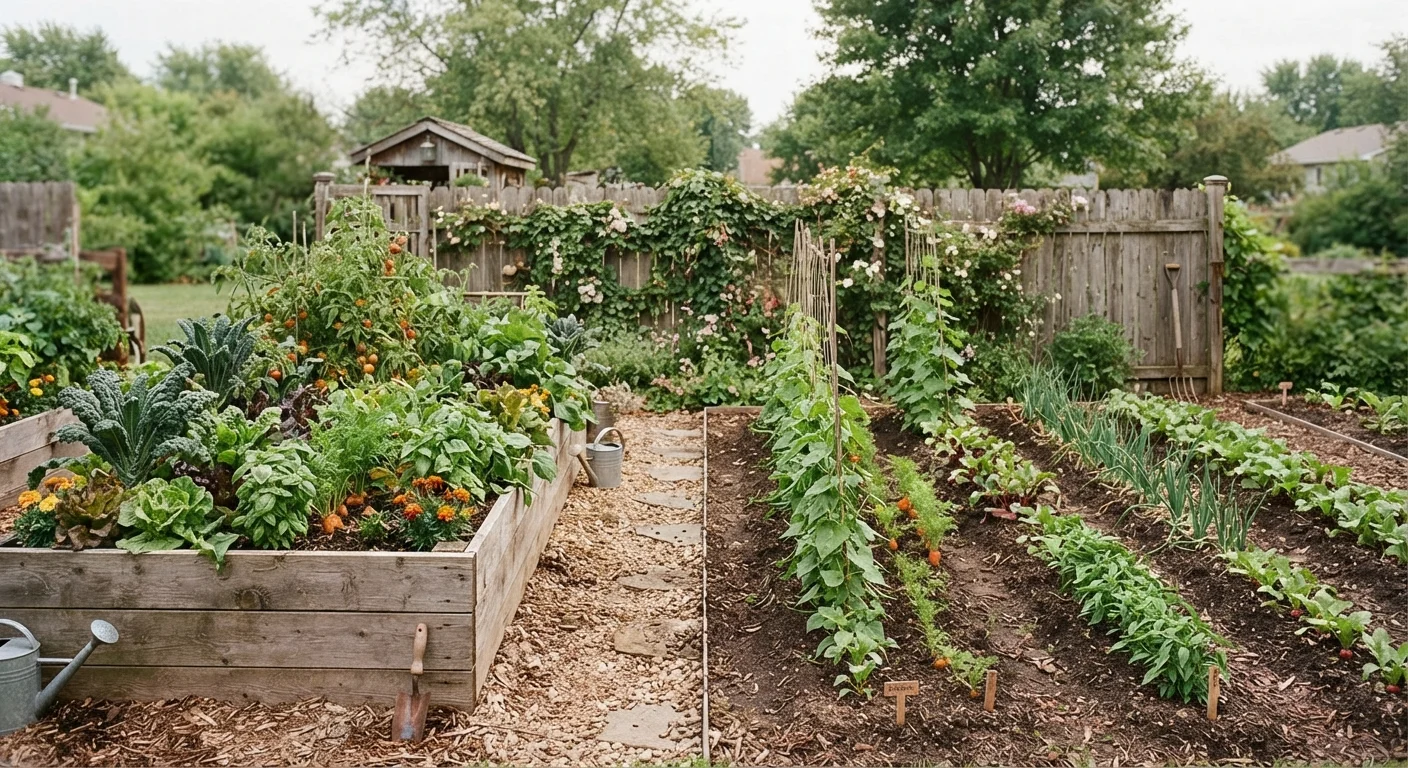
Raised bed gardening
The controlled, accessible setup with a higher upfront cost.
Best for: Families with poor native soil, limited mobility, or small defined spaces who want faster results.
Option B
In-ground gardening
The low-cost, scalable approach that works with the land you already have.
Best for: Growers with decent existing soil who want to cultivate larger areas without significant starting costs.
If your yard has compacted clay or contaminated soil
Raised bed gardening
Raised beds let you bypass problem soil entirely by filling with a custom mix, so you are not fighting the ground beneath you.
If you want to grow a large volume of vegetables affordably
In-ground gardening
Expanding an in-ground plot costs almost nothing beyond seed and labor, making it practical for families who want quantity.
If physical discomfort or limited mobility affects your gardening
Raised bed gardening
Beds built 12 to 18 inches tall significantly reduce the need to kneel or bend, making routine maintenance easier.
If you are starting out with a modest setup budget
In-ground gardening
Breaking ground and amending with compost requires far less initial spending than framing and filling a raised bed.
If you want to grow both annuals and perennials in a planned layout
Raised bed gardening
Defined beds make it easier to organize plant types and rotations, especially alongside perennial borders.
Startup costs and what to expect
In-ground gardening has a low barrier to entry. Breaking up a patch of lawn, adding compost, and sowing seed can cost under $50 for a modest plot. If your native soil is workable, that investment goes a long way. The main ongoing cost is soil amendments, particularly compost, which you can produce yourself to reduce spending further.
Raised beds cost more upfront. A single 4x8-foot cedar frame, filled with a quality soil mix, typically runs $150 to $300 depending on lumber prices and how much fill material you need. Multiple beds multiply that figure quickly. However, that cost is largely a one-time expense. Once built and filled, a well-maintained raised bed needs minimal structural investment for years.
Families watching their budget should weigh not just the initial outlay but the time horizon. An in-ground garden amended steadily over several seasons can build excellent soil without the frame cost, while a raised bed delivers reliable growing conditions immediately. Container gardening on a budget is another lower-cost alternative worth considering if outdoor space is tight.
Soil control and drainage
Soil is where raised beds have a clear advantage. You fill the frame with a custom mix, typically a blend of topsoil, compost, and aeration material, so plant roots never encounter the compacted or nutrient-poor ground below. This matters most in yards with heavy clay, sandy loam that drains too fast, or any history of chemical use.
In-ground gardens depend on what is already there. With consistent organic matter additions and minimal tilling, native soil does improve over time. The process takes patience. For crops that need well-drained conditions, poor drainage can cause root problems and crop loss that no amount of seed quality can overcome.
Raised beds also warm up earlier in spring because a smaller contained volume of soil heats faster than the ground. That can mean two to four extra weeks of usable growing season in cooler climates, which adds up across a full year.
| Criterion | Raised bed | In-ground |
|---|---|---|
| Startup cost | Higher ($150-$300+ per bed) | Lower (under $50 to start) |
| Soil control | Full control, custom fill | Depends on native soil |
| Drainage | Excellent; dries faster | Varies by yard and soil type |
| Weed pressure | Generally lower | Generally higher |
| Spring warm-up | Faster; longer season | Slower to warm in spring |
| Scalability | Costs increase with each bed | Scales with minimal added cost |
| Large crop suitability | Limited by frame size | Well-suited for sprawling crops |
| Accessibility | Easier with reduced bending | Requires kneeling or bending |
Maintenance over the growing season
Weed pressure is lower in raised beds. Because the soil is not disturbed from below and the bed perimeter creates a clear boundary, weed seeds have fewer entry points. In practice, most growers spend significantly less time weeding a raised bed than a comparable in-ground area.
Watering needs are different. Raised beds drain well, which prevents waterlogging, but they also dry out faster during heat spells. You may water more frequently than you would for an in-ground plot during a dry summer. A simple drip line or soaker hose addresses this without much cost.
In-ground gardens need more consistent attention to weeds, particularly early in the season before plants are established. However, they are more forgiving in drought conditions because deeper soil retains moisture longer and plant roots can reach further down.
Crop rotation is straightforward in either system. Reading seed packets gives you the spacing and depth information you need to plan both bed types efficiently.
What you can grow and where each method fits
Raised beds suit most vegetables and herbs well, especially those with shallow to medium root depth: lettuce, spinach, tomatoes, peppers, radishes, and bush beans all perform reliably. Depth matters for root crops. A standard 6-inch bed is not deep enough for carrots or parsnips; those need at least 12 inches of loose soil.
In-ground plots handle large, sprawling crops more naturally. Corn, winter squash, melons, and pumpkins need room that a 4x8 raised bed cannot provide without dominating the space. If you want to grow those crops at any meaningful scale, in-ground is the practical choice.
Thinking about plant selection across seasons? Perennial vs. annual plants covers how to balance long-lived plants with seasonal crops, which applies to both gardening methods.
For families with limited outdoor space, both methods can coexist: raised beds for intensive vegetable production and in-ground areas for larger crops or fruit trees. The two are not mutually exclusive, and many home growers use both depending on what a specific area of the yard will support.
Soil testing before you commit
Before deciding on a method, a basic soil test from your local cooperative extension office can tell you what your native soil lacks. Tests typically cost $15 to $30 and return pH, nutrient levels, and sometimes heavy metal screening. If results show workable soil with minor deficiencies, in-ground gardening with targeted amendments may be all you need. If the soil is heavily compacted or shows contamination, raised beds make more sense from the start.